Company News
Latest Advancements in Machine Vision Systems and Pharmaceutical Quality Expectations
The latest advancements in machine vision systems are making pharmaceutical inspection more useful, but the clearest progress is narrower than a promise of flawless automated quality control. Recent published studies show more capable, study-specific interpretation of tablet and packaging images, while a new public tablet benchmark makes model comparisons easier to reproduce. Those are meaningful developments for visible, defined defects. They do not establish that a research model will work on every dosage form, detect invisible quality attributes, or replace a manufacturer's approved quality decision. The practical question is which visual question the evidence answers, and under what conditions.
From a visible feature to a defensible observation
Traditional machine vision can compare a measured feature with a specified limit: a missing unit, a code that cannot be read, or an appearance outside a defined reference. Newer image-analysis methods can learn patterns from labeled examples instead of relying only on a hand-written rule for every variation. That shift has widened research into variable surfaces and defect appearances. It has also made the quality of the examples, labels, and independent tests more consequential.
The distinction matters in pharmaceutical manufacturing. A model may classify an image correctly because it recognizes a defect, or because all defective samples happened to share a particular background, lighting condition, or presentation. A convincing research result therefore needs a clear description of the product, how images were acquired, what counted as a defect, and how the test set was kept separate from model development. An image result is evidence about an observable feature; the product's approved specification and quality system still determine its meaning.
This article focuses on developments in published pharmaceutical visual-inspection research and the questions they raise for quality teams. For the basic components and application areas of a system, see SED Pharma's machine vision systems overview. For camera, lens, lighting, and field-of-view choices, see the separate pharmaceutical camera guide.
What recent tablet research actually shows
A 2025 study by Pathak, Kafle, and Vikram examined image-based classification of four induced defect types in red-orange film-coated placebo tablets: chipping, breaking, color non-uniformity, and speckling. The researchers reported strong performance on their study images after training a convolutional model. The useful advance is that appearance assessment was tested as a defined, repeatable image task, with the defect classes and evaluation measures stated. The result is not a transferable accuracy guarantee for other tablet colors, coatings, production lines, or naturally occurring defects. The published study abstract describes both the study material and the reported result.
The next problem is comparability. Two studies can report attractive accuracy figures while using different products, defect frequencies, lighting, and test splits. A 2026 PharmaVision dataset and benchmark paper takes a step toward reproducibility by releasing tablet images, labels, predefined data partitions, and evaluation code. Its authors describe 640 images, including production-sourced tablets and deliberately prepared defects. They also explain that the photos were taken with mobile phones, that some product groups lack detailed manufacturing context, and that the dataset is intended to support research comparison. A public benchmark can reveal weaknesses in a model comparison; it cannot stand in for evidence from the actual product and inspection environment.
Together, these studies show a change in the conversation. A headline accuracy value is less useful than knowing the defect definition, the physical samples behind the images, and whether the test conditions resemble the decision a manufacturer needs to make. That is a quality question, even when the technical work is done by image scientists.
The research is expanding beyond one tablet view
Recent work has also examined visual questions in other presentations. Herve and colleagues studied computer vision for particle inspection of continuously freeze-dried products. Their experimental images came from a tailored setup with induced particles. It is an example of applying image analysis to a product form where visible particles matter, not evidence that the same method is ready for every freeze-dried medicine or all particle types.
In packaging, Vijayakumar and colleagues investigated real-time visual defect detection in pharmaceutical packaging. That work illustrates ongoing research into locating visible defects in packaging images. The relevance of any such approach still depends on the package, material reflectivity, acceptable variation, and whether the defect of concern can actually be seen. A camera cannot prove a seal's barrier performance solely from a normal-looking image; an image-based result and a package-integrity conclusion are different kinds of evidence.
The progression across tablets, freeze-dried products, and packs is therefore not one universal inspection algorithm. It is a widening set of specific visual questions. Different products call for different examples, labels, presentation controls, and review routes. A research result should be read as evidence for the conditions it studied, not as a catalog specification for another application.
Better comparison still needs a defined context of use
The most useful improvement may be how critically teams now read a performance claim. A study can report accuracy, precision, recall, or F1-score, but those measures answer different questions. If rare but consequential defects are underrepresented, an overall accuracy figure can conceal a weak result on the very class that matters. If images of the same physical item appear in both training and test sets, an apparently independent result may be too optimistic. If a benchmark uses phone images, its value for research comparison does not automatically describe a high-speed production station.
The U.S. FDA's 2025 draft guidance on AI used to support regulatory decision-making discusses assessing model credibility for a specific context of use. It is draft, nonbinding guidance and is not a machine-vision equipment approval standard. Its relevant principle is modest: the evidence needed to trust a model depends on what decision it will support. A laboratory demonstration, an operator review aid, and an automated reject decision carry different consequences.
| Development visible in recent work | What it may help answer | Boundary for a pharmaceutical team |
|---|---|---|
| Learned image patterns for defined tablet defects | Can specified appearance classes be distinguished in a controlled image set? | Results depend on product appearance, defect examples, imaging, and independent testing. |
| Public image datasets and fixed test partitions | Can researchers compare methods using the same labeled examples? | A benchmark is not evidence of performance on a manufacturer's actual line. |
| Image analysis across more product forms | Can a visible particle or packaging feature be located in a particular study setup? | The method does not establish invisible quality attributes or transfer automatically to another presentation. |
| More explicit discussion of model credibility | Is the evidence proportionate to the decision the result will support? | A draft regulatory framework does not make a model or machine universally compliant. |
The table is a way to read the evidence, not an acceptance protocol. Actual product decisions require the manufacturer's own specifications, procedures, qualified personnel, and applicable regulatory requirements.
What manufacturers can take from these advances
For a production or quality team, the central improvement is the ability to ask a more precise question of a proposed visual application. What feature is observable? Does the image show the entire region in which that feature can occur? How were borderline and acceptable variations represented? Can a reviewer connect a flagged observation with the physical unit and the applicable standard? Those questions matter whether the software uses fixed rules or a learned model.
This does not turn the article into a camera selection guide. Hardware details and formal acceptance testing belong in the application-specific project. The broader point is that a newer algorithm should make a defined quality observation more reliable or more interpretable. If the team cannot state that observation and its limits, the word “advanced” tells it very little.
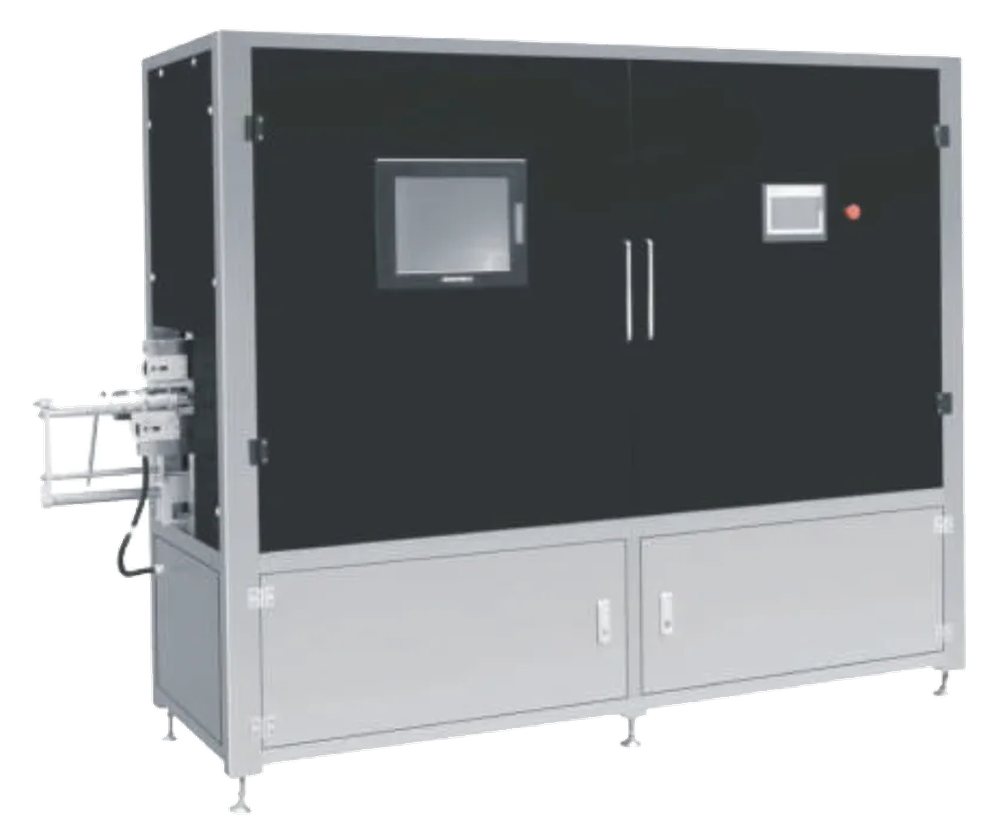
Published research is also not a claim about SED Pharma equipment performance. SED Pharma's visual inspection equipment range shows that tablets, capsules, vials, and blister packs present different tasks. Its vial inspection machine, pictured below, is a real example of an equipment category in which visual inspection may be relevant. The photo and listing do not demonstrate the research methods or performance figures cited above, and they do not establish suitability for a particular medicine.
Readers looking specifically at blister defects can use the separate blister-pack inspection article. This article's narrower purpose is to explain what recent research has changed in the evidence conversation and what remains product-specific.
Conclusion
The latest advancements in machine vision systems are visible in more capable study-specific image interpretation, research across additional pharmaceutical presentations, and better ways to compare models. They also expose the limits of a single performance number. A credible claim identifies the visible task, product and imaging conditions, reference labels, independent test, and decision that the result will support. For a manufacturer, progress means better evidence for a defined quality question, with the final product decision still governed by its approved controls.
If your team is considering a visual-inspection application, share the dosage form, product appearance, package, visible concern, and the decision the result must support through SED Pharma's technical inquiry form. The SED Pharma homepage provides the broader equipment context.
References
1. Pathak KA, Kafle P, Vikram A. Deep learning-based defect detection in film-coated tablets using a convolutional neural network. International Journal of Pharmaceutics. 2025;671:125220. https://pubmed.ncbi.nlm.nih.gov/39832574/
2. Artificial Intelligence-Based Quality Control of Pharmaceutical Tablets: A Visual Dataset and Benchmark for Automated Defect Detection. Pharmaceutics. 2026;18(10):1287. https://www.mdpi.com/1999-4923/18/10/1287
3. Herve Q, Ipek N, Verwaeren J, De Beer T. Automated particle inspection of continuously freeze-dried products using computer vision. International Journal of Pharmaceutics. 2024;664:124629. https://doi.org/10.1016/j.ijpharm.2024.124629
4. Vijayakumar A, Vairavasundaram S, Koilraj JAS, et al. Real-time visual intelligence for defect detection in pharmaceutical packaging. Scientific Reports. 2024;14:18811. https://www.nature.com/articles/s41598-024-69701-z
5. U.S. Food and Drug Administration. Considerations for the Use of Artificial Intelligence To Support Regulatory Decision-Making for Drug and Biological Products. Draft guidance, January 2025; nonbinding and not for implementation. https://www.fda.gov/regulatory-information/search-fda-guidance-documents/considerations-use-artificial-intelligence-support-regulatory-decision-making-drug-and-biological