Company News
Machine Vision Systems Overview: Why Visual Quality Expectations Are Changing

Introduction
This machine vision systems overview starts with the quality question, not the camera or software question. In pharmaceutical operations, the visible condition of a tablet, capsule, vial, label, or pack is often where a broader quality concern becomes visible. A scuff, an incomplete code, a missing product, a damaged seal, or an inconsistent presentation may not explain its own cause. It does, however, create a review point that can affect batch disposition, packaging confidence, and the way a product is perceived by the people who handle it.
That is why visual quality expectations are changing. Teams are increasingly asking not only whether a defect can be detected, but also whether the quality decision is understandable, traceable, and proportionate to the actual product risk. This article is deliberately not a camera-selection guide, a system specification, or a process tutorial. It considers the business and quality context around visual review: what should be defined before a visual standard is discussed, what evidence makes a decision more useful, and where packaging and product appearance meet.
What a Machine Vision System Includes
At a high level, a machine vision system combines image capture, controlled illumination, image processing, a decision rule, and a response to that decision. The camera acquires the image. The lens defines how the product area is viewed. Lighting makes the relevant surface, code, seal, or shape visible with enough contrast for the intended assessment. Software converts the image into a controlled comparison or classification. Where the application calls for it, the system can communicate the result to a rejection or diversion device so that the line response is linked to the review decision.
The mix changes with the inspection task. Tablets and capsules may be reviewed for appearance, breakage, color variation, or printed features. Vial and bottle applications may focus on container condition, closure appearance, fill-related cues, labels, or readable codes. Blister-pack inspection can involve product presence, pocket condition, foil presentation, seal-related features, and printed information. The point is not that one configuration serves every dosage form. It is that each application needs a defined visual target before the hardware or software discussion becomes meaningful.
The same system may also need product handling, a controlled viewing position, a result record, and a way to route exceptions for further review. Those supporting elements matter because the quality value of an image depends on whether the product was presented consistently and whether the observation can be interpreted against an approved standard. Configuration details should be developed for the individual product and site under the relevant procedures; this overview only establishes the common building blocks and typical application areas.
The difference between seeing a variation and understanding it
A visible variation is an observation, not a conclusion. A light mark on a tablet, a printed character that appears faint, or a pack that looks different from a reference sample may deserve attention for different reasons. The quality significance can only be determined through the approved criteria, the product history, the relevant records, and the appropriate review route. Treating visibility as a trigger for disciplined assessment is more useful than assuming that visual technology can assign a complete quality meaning on its own.
This distinction also improves communication outside the quality unit. Packaging, operations, supply chain, and commercial teams can describe what they observed without overstating the result. Quality reviewers can then assess the evidence in the correct context. A shared vocabulary for visible condition, reference standard, and escalation helps keep the product discussion clear when an issue crosses functional boundaries.
Visible quality is part of the product experience
For a patient, distributor, pharmacist, or quality reviewer, the product is encountered through what can be seen and read. The product surface, fill appearance, closure, printed information, label placement, blister pocket, carton presentation, and tamper-evident features all contribute to that encounter. Some findings may be cosmetic; others may signal a condition that needs formal assessment. The responsible approach is to avoid treating every visual variation as either harmless or critical before the relevant quality criteria are applied.
A useful visual-quality discussion therefore separates three things: the observed condition, the documented acceptance standard, and the investigation path when the two do not align. That separation keeps the conversation evidence-based. It also prevents a visual review from becoming a vague promise of perfection, which is neither a practical production goal nor a sound quality position.
The quality standard should also be understandable to the people who use it. A reference that is difficult to interpret will produce inconsistent decisions, even when it is technically detailed. Clear descriptions, controlled examples where appropriate, and an agreed response to uncertainty are often more valuable than adding more labels to a defect list. The aim is not to make every observation binary; it is to make the review pathway defensible and repeatable.
Why expectations are moving beyond simple pass or fail decisions
Packaging carries information as well as protection
Packaging is expected to protect the product, present required information legibly, and help preserve confidence as the product moves through the supply chain. A visible packaging issue can therefore have more than one consequence. It may affect identification, handling, distribution, or the confidence that a customer places in the product. The appropriate response depends on the material, dosage form, market, and approved quality system. The common thread is that visual criteria should be connected to a defined purpose, rather than copied from a generic defect list.
Traceable review supports better decisions
When a visual finding is recorded in a consistent way, teams can compare it with approved samples, relevant batch evidence, and the established escalation path. This does not mean that an image alone makes the quality decision. It means that the observation can be discussed with a shared reference. Consistency matters especially when different functions see the same product at different stages: production, packaging, quality assurance, warehousing, and customer-facing teams may each see a different part of the same risk.
A useful record also preserves the difference between what was seen and what was decided. It can identify the product and package, the location of the condition, the time of observation, and the controlled materials that were reviewed. The site quality system determines which records are required. The broader principle is simple: a visual finding becomes more useful when the next reviewer can understand its context without reconstructing the whole event from memory.
For electronic records used in FDA-regulated contexts, consult 21 CFR Part 11 and apply it as appropriate to the site and intended use.
Appearance standards must remain product specific
A defect vocabulary is useful only if it fits the product. The appearance of a film-coated tablet, hard capsule, vial, or blister pack is affected by different materials and different acceptance conditions. Lighting, surface finish, printing, orientation, packaging format, and validated procedures may all influence how a finding is assessed. For this reason, broad statements such as “zero defects” should not replace product-specific criteria, approved samples, and documented escalation procedures.
This product-specific approach is particularly important for packaging. A readable code, an intact closure, a correctly positioned label, and an undamaged blister are different observations with different possible implications. They should not be collapsed into a single generic measure of visual quality. Defining the purpose of each check helps a team explain why the condition matters and what evidence needs to be reviewed if it changes.
A practical quality conversation before any system discussion
Before discussing a visual-inspection solution, a team can make the conversation more useful by defining the quality context first. The following questions are not operating instructions; they are a shared brief for quality, packaging, and engineering stakeholders.
| Question to align | Why it matters |
|---|---|
| What visible condition is being protected? | It connects the review to product appearance, packaging integrity, identification, or another defined quality concern. |
| What is the approved acceptance reference? | It anchors the discussion in specifications, approved samples, and the established quality system rather than informal preference. |
| What evidence should accompany an exception? | It clarifies whether images, batch records, packaging samples, or other controlled evidence are needed for review. |
| Who must assess an unclear finding? | It defines escalation early and avoids treating an ambiguous observation as an automatic conclusion. |
| What product and packaging conditions apply? | It prevents a standard created for one dosage form or pack from being assumed valid for another. |
Where machine vision fits in the broader quality picture
Machine vision can support a disciplined visual-review framework when the product and packaging questions are already clear. Its role is not to replace quality judgment, supplier qualification, or the approved change-control process. Its value comes from helping teams make observations more repeatable and more reviewable across the defined scope of a product or package.
The scope should remain proportionate to the decision being supported. A visual review may be about confirming a packaging presentation, identifying a recurring appearance condition, or creating a clearer record for quality follow-up. These are different objectives. Defining the objective at the outset helps avoid a common problem: expecting one visual checkpoint to answer questions that belong to product development, process validation, supplier controls, or final quality disposition. A mature visual-quality discussion makes those boundaries explicit and routes each question to the correct owner.
For example, capsule appearance and weight are separate quality considerations that may need to be assessed together in a particular application. SED Pharma lists an integrated capsule appearance and weight inspection machine within its visual-inspection equipment range. The relevant takeaway for a quality conversation is not a universal performance claim. It is that the inspection scope should be matched to the product risks and the evidence that the site needs to review.
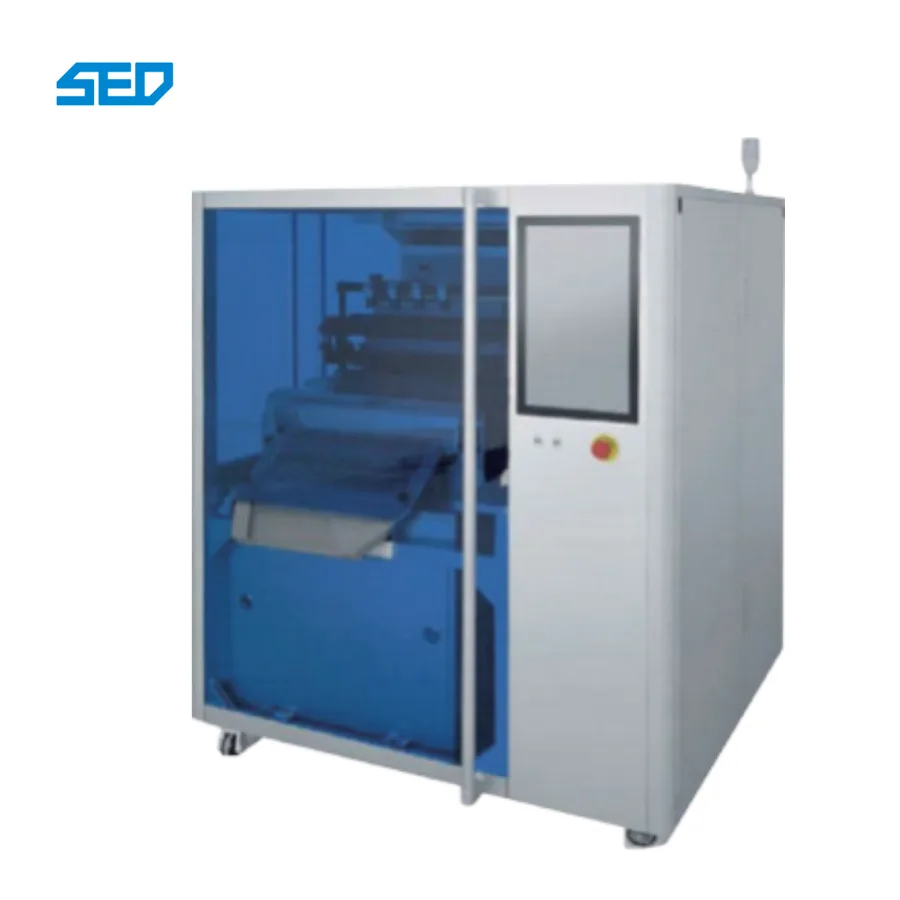
Explore the relevant equipment family: Visual Inspection Equipment.
For a related capsule application, see: Integrated Capsule Appearance and Weight Inspection Machine.
Keep the article boundary clear
This overview does not prescribe camera configuration, lighting design, software thresholds, line speed, sampling plans, validation protocols, or acceptance limits. Those matters depend on the dosage form, packaging materials, facility controls, intended use, and site procedures. Any change that could affect product quality or validated status should follow the site SOP, risk assessment, and change-control process.
For an EU GMP documentation reference, see EudraLex Volume 4 Chapter 4 Documentation.
Teams seeking a technical camera-selection discussion can refer to the existing SED Pharma resource on machine vision cameras for pharmaceutical inspection. That resource has a different intent: it addresses how a camera specification is developed for a defined inspection task. Keeping these two pages distinct lets the overview serve quality and packaging awareness without competing with a technical selection guide.
Read the technical resource: How Do You Select a Machine Vision Camera for Pharmaceutical Inspection.
For a packaging-specific perspective, see: How Blister Pack Visual Inspection Systems Improve Pharmaceutical Quality.
For an adjacent equipment overview, see: Tablet and Capsule Inspection Equipment What You Must Know Before Buying.
Conclusion
Machine vision systems are becoming part of a wider conversation about visible quality, packaging confidence, and evidence-based review. The most useful starting point is not a generic feature list. It is a clear definition of what the product and packaging team needs to protect, how a visual finding will be assessed, and what documentation supports the decision. From there, any equipment discussion can be grounded in the actual product context rather than in an abstract claim about inspection technology.
SED Pharma can help teams frame an initial conversation around dosage form, package type, visible quality concerns, and the review evidence they need. Share representative product and packaging photos, the relevant approved appearance criteria, and the specific visible conditions that need assessment for an initial technical review.
Start the conversation at SED Pharma Contact.
Return to SED Pharma for the wider equipment range.