Company News
Automated Packaging Equipment: Why Product Protection Matters Beyond Speed
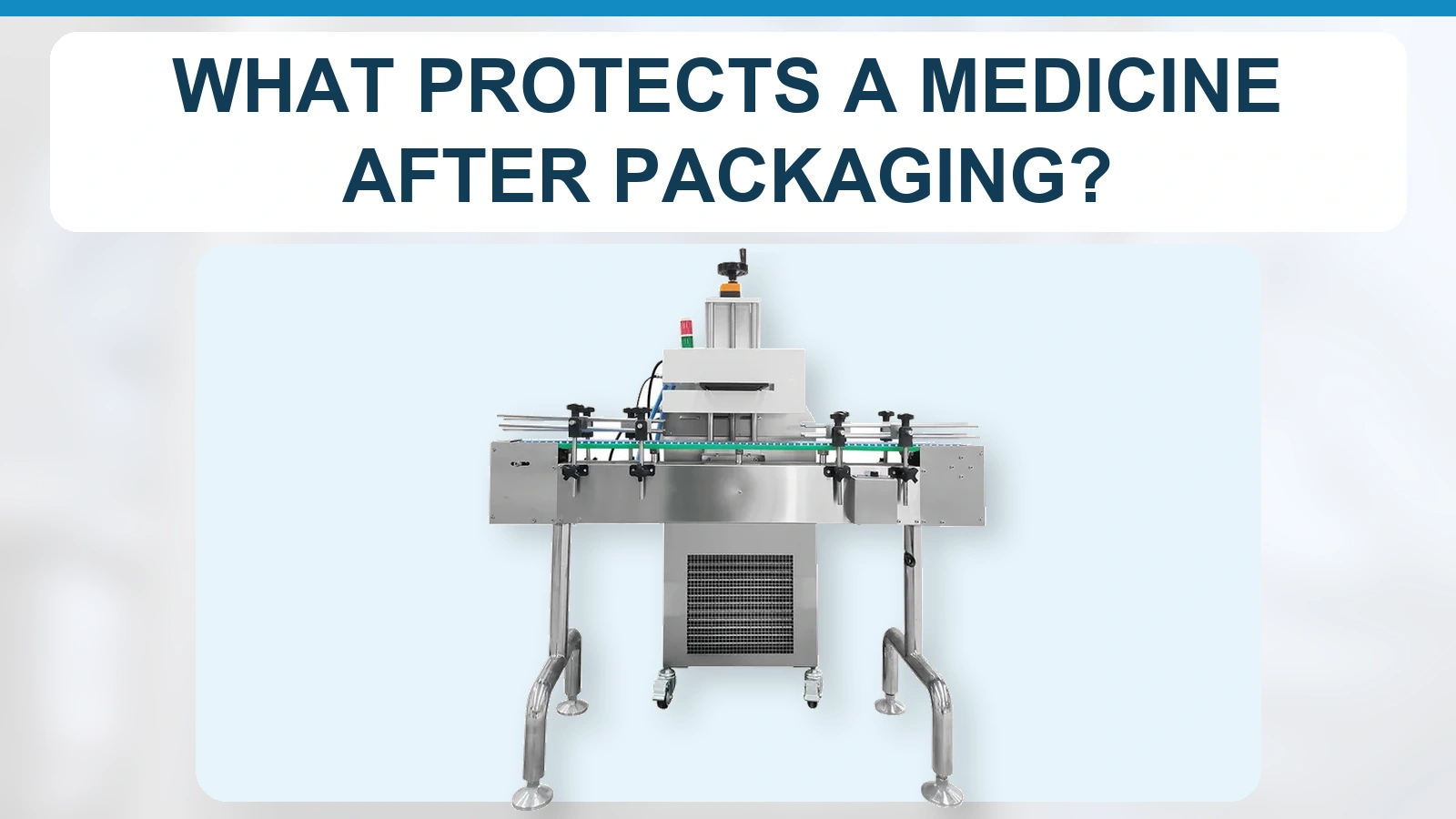
Automated packaging equipment is often judged by how many packs it can move in an hour. For a medicine, the more important question is whether the finished presentation continues to protect the product and tells the right story about it. A fast line does not compensate for an unsuitable container, damaged closure, unreadable identity, or mixed packaging components. Automation can make a defined packaging operation more consistent and make exceptions easier to notice, but the manufacturer must establish the package's suitability for its formulation, market, and shelf life. Product protection is therefore an outcome of the complete packaging system and its controls, not a speed rating.
A package has more than one protective role
The World Health Organization's guidance on packaging for pharmaceutical products describes several linked functions: protection from external influences and physical damage, containment, correct identification, and information for the user. These functions do not collapse into a single measure such as line output or the appearance of a finished carton. A container can be mechanically sound but carry the wrong label. A correctly printed carton cannot rescue a product from an unsuitable primary package. A visually neat seal does not by itself demonstrate the required barrier performance.
The relevant risks differ among products. A moisture-sensitive tablet, a light-sensitive liquid, a sterile injection, and a powder sachet do not need the same packaging evidence. Primary packaging contacts or directly contains the product; secondary packaging may protect, organize, and communicate information; transport packaging addresses handling and distribution. Each layer has a role, and the role must be defined for the actual formulation and route to market. This article is about why packaging automation must preserve those roles consistently. SED Pharma's separate article on blister protection from moisture, oxygen, and light discusses one package format in greater detail.
Protection begins with the product, not the machine
The package is chosen against the product's known sensitivities and intended storage conditions. The WHO guidance makes a crucial distinction: general material properties can inform a choice, but suitability and stability for a particular product require product-specific packaging and stability studies. That distinction prevents a common overstatement. A machine may apply a closure consistently, yet neither the machine name nor a supplier's demonstration proves that the complete package maintains a medicine's quality throughout its stated shelf life.
For products marketed in the United States, 21 CFR 211.94 requires container-closure systems to provide adequate protection against foreseeable external factors in storage and use that can cause deterioration or contamination. The requirement concerns the container-closure system and its suitability; it is not a universal claim that one sealing method protects every medicine. The product owner must determine the applicable evidence, including compatibility, stability, and integrity where appropriate.
This is why the phrase “protective packaging” should prompt a question rather than end a discussion: protection against what, for which product, over which conditions? The answer could involve moisture ingress, light exposure, breakage, leakage, contamination, or another justified risk. The evidence may come from stability work, material qualification, package studies, process controls, and product-specific acceptance criteria. Automated packaging equipment helps execute a chosen presentation; it does not choose or validate the presentation on the manufacturer's behalf.
Correct information is part of protection
Packaging also protects against confusion. Product name, strength, batch or lot identification, expiry, instructions, and destination-specific information may all matter to the finished presentation. The details depend on the market and product. A print that is sharp but wrong is still a serious packaging failure; a code that is correct in the data system but unreadable on the pack may fail the practical purpose of identification.
In the United States, 21 CFR Part 211 Subpart G sets packaging and labeling controls, including written procedures, examination of materials, and controls to prevent mix-ups. Those provisions do not prescribe a single automatic machine. They show why the quality of packaging information has to be considered alongside physical protection. For covered medicines in the European Union, the Falsified Medicines Directive framework adds safety features to the outer packaging; its scope and implementation must be assessed for the intended market rather than generalized to all products.
Automation can help keep a specified presentation together: the intended container, closure, label, leaflet, and carton. It can also support checks that a printed or applied feature is present and readable. The quality system still needs approved artwork, material control, line clearance, exception handling, and final disposition. A camera reading a code does not, by itself, prove that the code belongs to the correct product and batch. SED Pharma's discussion of pharmaceutical packaging standards and machinery validation treats the regulatory and qualification questions separately.
Consistency matters across a run
A protective presentation has to be repeated across many individual units, including after a change of packaging materials, artwork, container size, or batch. This is where automation may offer value beyond labor savings. A controlled sequence can reduce variation in how a defined operation is carried out and can make a deviation visible before it becomes a large quantity of questionable product. It cannot remove variation in incoming materials or replace a decision about whether an observed change is acceptable.
Consider a bottle presentation. The manufacturer may have selected a bottle, liner, cap, label, and secondary carton for the medicine. The packaging process must keep the intended components associated with the right product and batch, apply them consistently, and segregate units with unresolved exceptions. A correctly applied liner and a visually acceptable cap are related observations, but neither alone proves the finished system's suitability. Likewise, a carton that closes neatly does not establish that its leaflet or printed information is correct. These are different quality questions that happen to meet in one finished pack.
The same logic applies to sachets and blisters without turning them into the same process. A flexible pack's protection depends on its material, product compatibility, seal and intended storage. A blister's protection depends on its formed and sealed package system. Automation can repeat a specified operation; the product-specific package studies and controls determine whether the outcome is suitable. Treating every format as “sealed, therefore protected” misses the reason each format was selected.
What a useful packaging conversation covers
The following table separates the finished-pack question from the evidence that can support it. It is an editorial map of packaging responsibilities, not a machine specification or a universal acceptance protocol.
| Finished-pack question | What automation may help make consistent | What still requires product-specific evidence |
|---|---|---|
| Does the package protect the product? | Repeat a defined forming, filling, closing, or sealing operation. | Material suitability, compatibility, stability, and integrity where relevant. |
| Does the pack contain the intended product and components? | Maintain an orderly presentation and detect specified missing or misplaced features. | Approved component identity, batch association, reconciliation, and disposition of exceptions. |
| Can the intended user identify and use the medicine correctly? | Apply and check specified print, label, leaflet, or code features. | Approved artwork, market requirements, readability criteria, and correct product information. |
| Will the presentation remain consistent through routine changes? | Repeat controlled sequences and make selected exceptions observable. | Changeover procedures, material controls, review of deviations, and continued suitability. |
The table explains why a single throughput number cannot summarize packaging quality. A line's output is only useful when it is the output of the intended, acceptable presentation. A quality team may also need to know what happened to interrupted, rejected, or reworked units. These questions belong in the packaging strategy, even when they are not the headline of an equipment brochure.
When a packaging exception occurs, a useful record connects the affected units to the event and its final disposition. It identifies the product and batch, packaging-component lots, equipment and line, relevant event time or sequence, and the unit or case range potentially affected. It also shows which units were rejected, held, inspected, or reworked where permitted, with counts reconciled against output where applicable. A code-read failure means little if the event and reject confirmation cannot be tied to the correct batch; an unconfirmed reject calls for investigation rather than an assumed safe outcome. For U.S.-regulated drugs, 21 CFR 211.188 specifies batch-record details including equipment, components, labeling, and investigations, while 21 CFR 211.192 requires quality review and investigation of unexplained discrepancies. The precise record design depends on the product, pack, process, and market. Automation can capture events, but the manufacturer must connect them to a justified scope and documented disposition.
Where a real machine fits
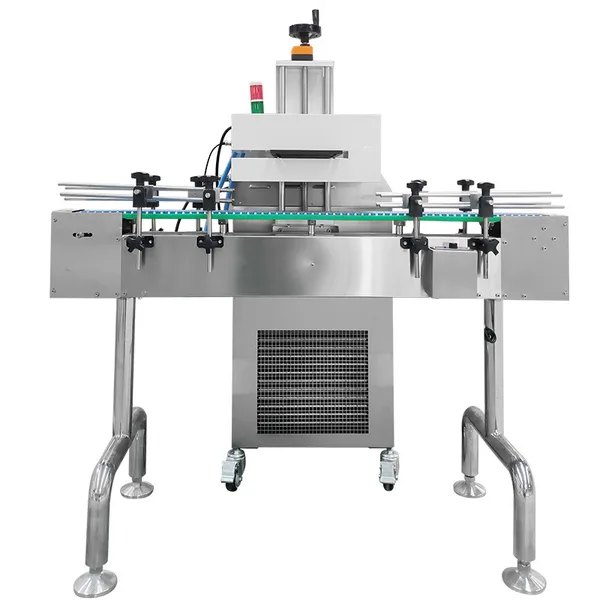
SED Pharma's automatic packing machine range spans different packaging applications. One relevant example is its induction sealing machine for capped bottles, pictured below. The product listing describes application of a foil liner after a cap is placed. That makes it a useful illustration of one operation in a bottle presentation, not proof that a particular medicine's container-closure system has passed integrity or stability requirements. The listing contains differing bottle-size descriptions, so this article does not quote a universal size or speed claim from it.
When a team discusses equipment, it should bring the product and pack into the conversation: dosage form, container and closure, the intended market, storage conditions, printed information, and the quality question the operation must support. A machine can be evaluated in that context. It should not be credited with the protective properties of a package that have not been established for the product. For a narrower discussion of weak or leaking bottle liners, see the separate induction sealing defects article.
Conclusion
Automated packaging equipment matters beyond speed because a medicine's finished pack must continue to protect its contents, carry correct and readable information, and remain consistent across a run. Automation can make a specified operation repeatable and help reveal defined exceptions. It cannot turn an unsuitable material into a suitable package or replace the product owner's compatibility, stability, labeling, and quality decisions. The meaningful outcome is an acceptable finished presentation whose protective role is understood and supported by evidence.
If you are planning a packaging application, share the dosage form, proposed materials and closure, intended markets, storage conditions, artwork requirements, and the packaging question you need to answer through SED Pharma's technical inquiry form. The SED Pharma homepage gives the broader equipment context.
References
1. World Health Organization. Guidelines on Packaging for Pharmaceutical Products, WHO Technical Report Series 902, Annex 9. https://www.who.int/docs/default-source/medicines/norms-and-standards/guidelines/regulatory-standards/trs902-annex9.pdf?sfvrsn=82b4c57d_2
2. Electronic Code of Federal Regulations. 21 CFR 211.94, Drug Product Containers and Closures. https://www.ecfr.gov/current/title-21/chapter-I/subchapter-C/part-211/subpart-E/section-211.94
3. Electronic Code of Federal Regulations. 21 CFR Part 211, Subpart G, Packaging and Labeling Control. https://www.ecfr.gov/current/title-21/chapter-I/subchapter-C/part-211/subpart-G
4. European Commission. Falsified Medicines Directive framework and safety features. https://health.ec.europa.eu/medicinal-products/falsified-medicines_en
5. Electronic Code of Federal Regulations. 21 CFR 211.188, Batch Production and Control Records. https://www.ecfr.gov/current/title-21/chapter-I/subchapter-C/part-211/subpart-J/section-211.188
6. Electronic Code of Federal Regulations. 21 CFR 211.192, Production Record Review. https://www.ecfr.gov/current/title-21/chapter-I/subchapter-C/part-211/subpart-J/section-211.192