Company News
Softgel Encapsulation Machine: How to Select Die Roll, Fill Range and Drying Capacity
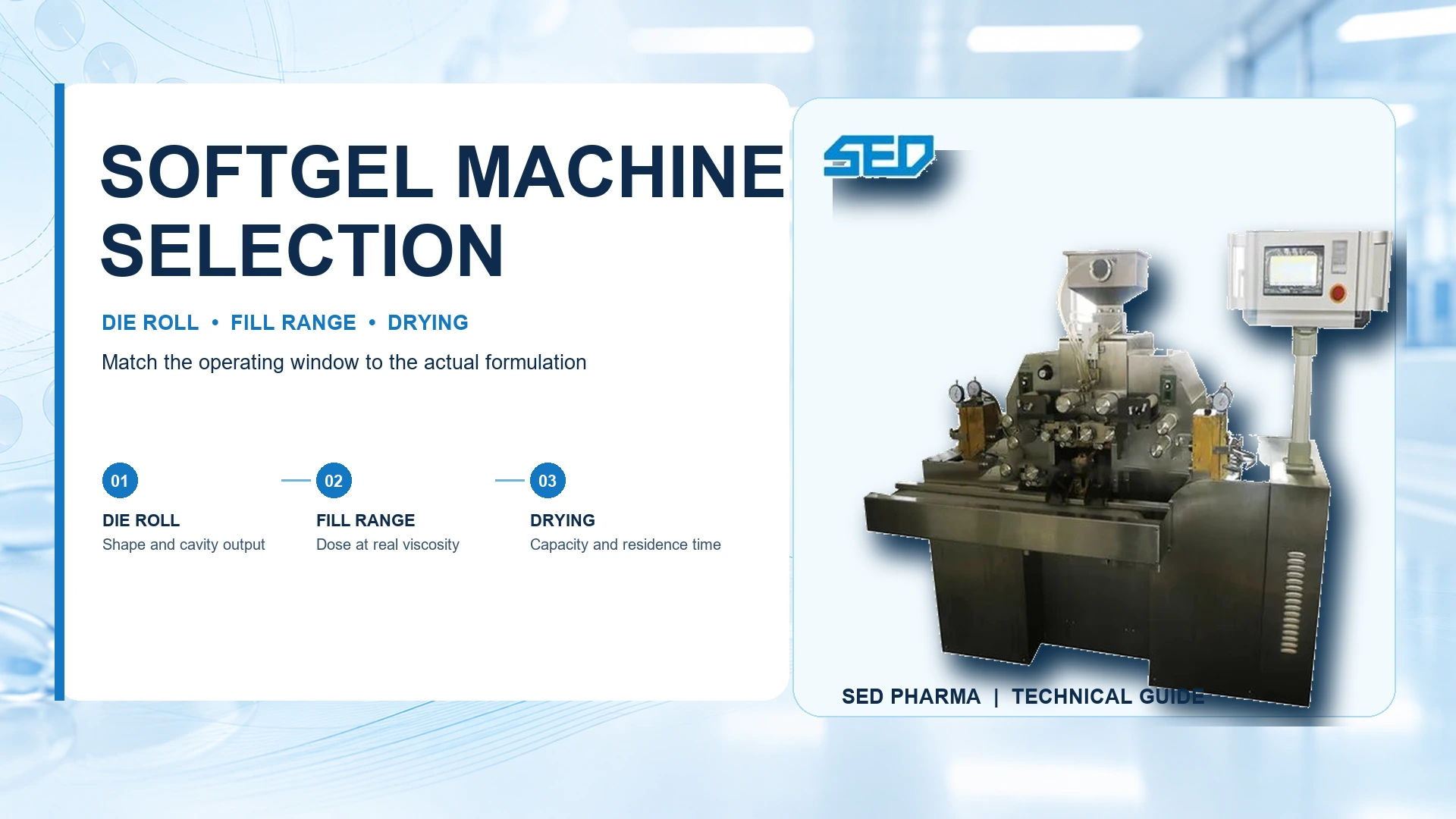
Select a softgel encapsulation machine by checking three linked limits: the die cavities must produce the required capsule shape and volume, the metering system must dose the actual formulation accurately across its intended range, and drying must absorb the sustained output. Start with the product specification and required good capsules per shift, then test the proposed die, pump and drying configuration together. A nominal maximum speed or piston volume alone cannot establish usable output. Ask for a product-specific trial and define acceptance criteria before finalizing the equipment configuration.
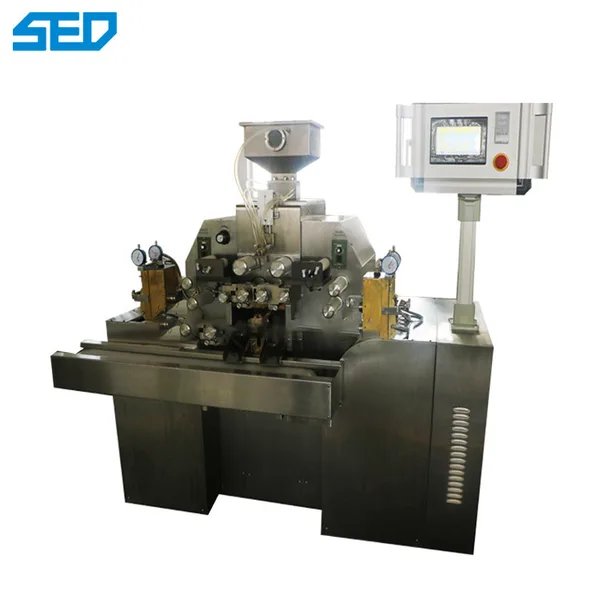
Start with the product and required good output
List each planned product by capsule shape, target fill weight, fill density at dosing temperature, shell formulation, expected batch size and release specifications. Include anticipated changes in viscosity and any suspension settling, temperature sensitivity or compatibility concerns. A machine selection based on one easy-flowing oil may not cover a viscous or settling suspension.
Express the production requirement as acceptable finished capsules per shift, with shift length, operating calendar and expected losses stated separately. Work backward through inspection yield and planned production time. For example, if the target is 100,000 good capsules in an eight-hour shift, an assumed 90% inspection yield and six hours of actual encapsulation imply approximately 18,519 formed capsules per operating hour. These figures illustrate the calculation only; replace them with measured or agreed values. Confirm whether yield includes startup and shutdown losses before applying another allowance.
Use the resulting rate to compare the die set, fill delivery and downstream equipment at the same product and operating conditions. Ask SED Pharma to review the proposed operating window and the scope of the supplied line, including any separate dryers, trays, air treatment and utilities.
Choose the die roll for the capsule and operating window
A matched die set determines the cavity shape and arrangement, while the usable fill depends on the capsule design, shell and formulation. Specify the desired shape, nominal fill volume, finished dimensions, seam and visual requirements. Convert fill weight to volume using density measured at the intended dosing temperature: volume = target fill weight ÷ density. Confirm units and account for normal formulation variation; a catalog capsule size is not proof that the actual formulation will fit and seal.
Ask for the cavity count per revolution for the proposed matched die pair, the acceptable speed range and the interface with the machine and injection wedge. Theoretical capsules per hour equal cavities produced per revolution × die revolutions per minute × 60. Count complete capsules, not both halves of each cavity. This is a geometric ceiling, before rejects and interruptions; it is not a guaranteed sustained rate.
Source: Catalent, RP Scherer Softgel Technology: rotary-die formation, filling and sealing
For each size, request a trial with representative shell and fill. Check fill distribution, seam integrity, leaks, shape, ribbon condition and output at the intended operating speed. Inspect the die set for correct alignment and wear according to the equipment supplier’s procedure. If a smaller die or different shape is added later, repeat the output and drying calculation rather than assuming the same hourly rate.
Match fill range to the real formulation
A piston’s stated maximum volume describes a mechanical range, not a promise of accuracy at every setting. Identify the minimum and maximum doses for every product and confirm the proposed pump, piston and adjustment range can operate at both ends. Ask how dose is set, how each channel is checked, and whether change parts are needed between products.
Measure fill density and viscosity under representative conditions. For suspensions, document particle size, solids concentration, settling behavior and agitation requirements. Verify that the feed path, pump and wedge can handle the material without unacceptable settling, aeration, blockage or degradation. Product-contact compatibility and cleaning must be assessed for the actual formulation.
During a trial, use a defined sampling plan across channels and time, including startup and the intended sustained rate. Measure individual fill weights using an appropriate approved method and compare them with the product’s pre-agreed limits. Separate pump repeatability from assay or content uniformity: passing a fill-weight check alone does not establish dose uniformity for a suspension. Record temperature, speed and formulation conditions with the results.
Source: CapPlus softgel equipment note: fill range, pump configuration and output limitations
Size drying for sustained output and residence time
The dryer must accommodate fresh capsules at the sustained encapsulation rate, including startup, transfers and any downstream hold. Establish whether the proposed system includes initial tumble drying, trays or another final drying stage. Identify usable loading, residence time, transfer frequency, available space and air-conditioning capacity for each stage.
For a steady operation, a first inventory estimate is fresh-capsule rate multiplied by the required residence time. If a line delivers 20,000 capsules per hour and a product requires two hours in a stage, approximately 40,000 capsules occupy that stage on average. This is an illustrative inventory, not a dryer rating: account separately for discrete batches, loading limits, cleaning, changeovers, uneven flow and contingency. Tray counts also depend on the permitted loading per tray and product-specific drying performance.
Agree on a drying endpoint and sampling plan with quality and process development. Depending on the product, checks may include shell moisture, mechanical condition, appearance, leakage and stability-related attributes. Air temperature, humidity, airflow, loading and residence time must be set and validated for the actual shell and fill. A dryer that accommodates peak capsule count may still fail to remove moisture at the required rate, or damage a fragile product.
Source: CapPlus softgel equipment note: tumble drying, tray capacity and product-dependent production rates
Resolve mismatches before accepting the line
| Concern | Confirmation test | Selection or corrective action |
|---|---|---|
| Target rate is not reached | Count good units over a representative run; record stops and reject points. | Recalculate from actual cavity count and operating speed; review the limiting stage. |
| Fill varies across channels or over time | Sample individual fills across channels and time; record viscosity and temperature. | Investigate metering, feed and formulation behavior; confirm suitable pump and settings. |
| Leaks or weak seams occur | Inspect seam and leakage using an agreed method; correlate with operating records. | Check die condition, alignment, ribbon and injection settings under the approved procedure. |
| Drying inventory grows | Measure rate in and out, loading, residence time and product endpoint. | Revise drying capacity, scheduling or upstream rate; verify with a representative run. |
Use this order: confirm product and good-output targets; calculate the die and pump requirements; model each drying stage; then run representative material through the proposed configuration. Investigate one constraint at a time and document the outcome. Follow site SOPs, change control, risk assessment and validation before changing settings that may affect product quality.
Define the acceptance test and next step
Write the acceptance protocol before the trial. It should identify the actual die set, formulation and shell, the approved operating range, utilities, operators, change parts and documentation. State whether the test covers the full drying endpoint or only encapsulation and preliminary drying. Repeat the assessment at the smallest and largest planned fills when the product range requires it.
For a production-representative factory acceptance test, use a defined baseline such as 30 minutes for startup stabilization followed by four continuous hours at the agreed target rate. Record every planned and unplanned stop, its duration and its cause. Before the run, state the maximum permitted unplanned downtime for that four-hour period, identify which stops are excluded by agreement, and define the denominator for yield: formed capsules, capsules presented to inspection, or released good capsules. Separately record startup scrap, process rejects, inspection rejects, samples and rework, so an apparent throughput result cannot hide loss at another stage.
Define the sample plan before product is made. A practical protocol can require individually identified samples from every active fill channel at startup, once each hour during the four-hour run, and at the end of the run. Set the number of capsules per channel and interval in the approved protocol; use a statistically justified quantity for the product rather than an arbitrary machine-wide count. Determine individual fill weight with a calibrated balance using the stated tare and handling method. Evaluate leakage by a named, approved test method at the same sampling points, including after the specified drying stage. The protocol must state the allowable fill-weight variation, leakage limit and action for a failed result. Those product-specific criteria should be approved by the responsible quality and validation functions, not inferred from a machine specification.
Explore the softgel encapsulation machine range and review the current SED-300RJ-I product page as a starting point. Confirm the final die, pump and dryer configuration for your product rather than assuming a listed specification applies to every formulation.
For background, see how soft gel capsules are made.
Send SED Pharma your capsule shape, target fill weight and density, formulation behavior, required good output per shift, drying endpoint and available utilities for an initial technical review.