Company News
How to Prevent Material and Artwork Mix Ups During Cartoning Changeovers
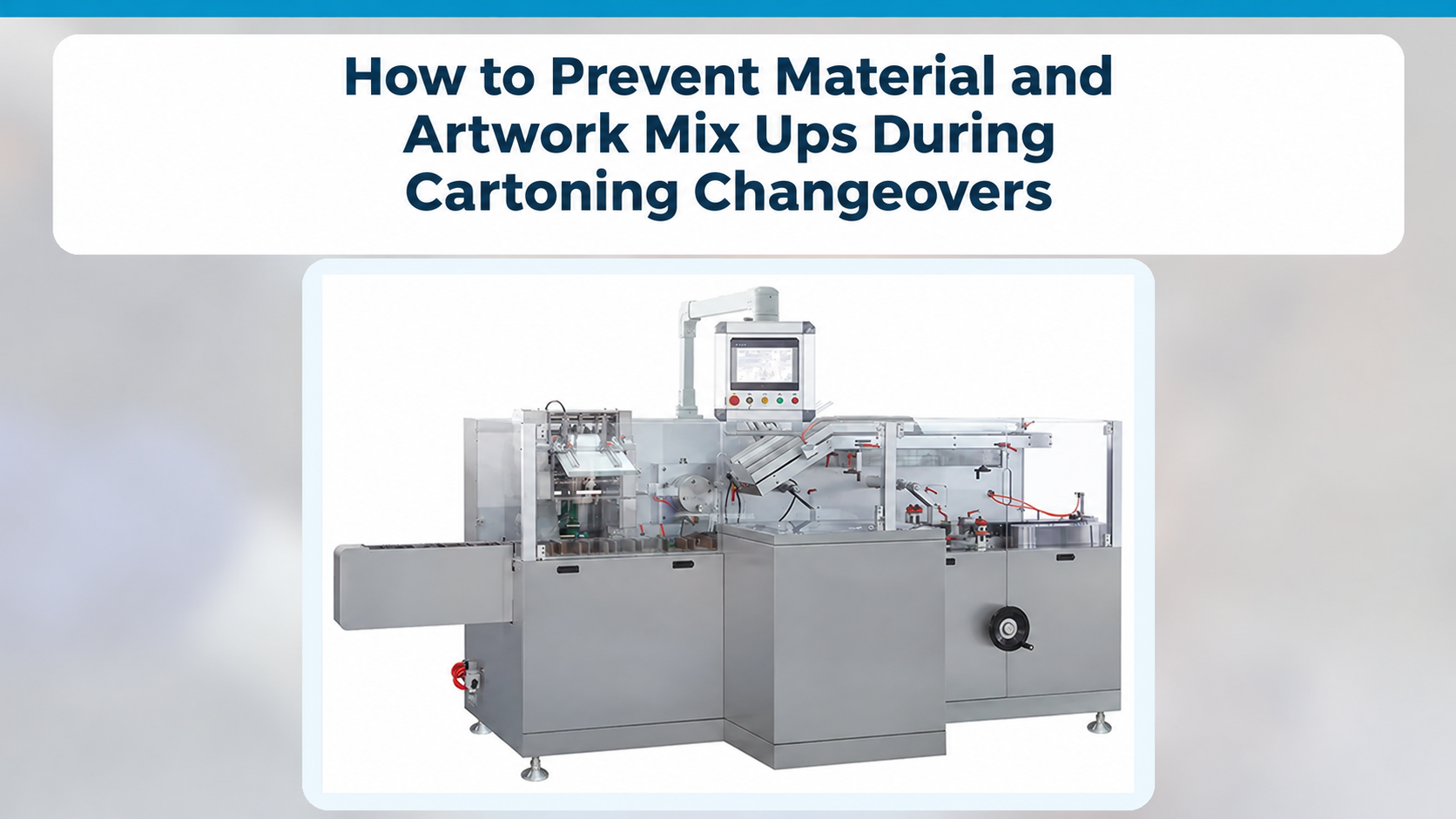
A carton, leaflet, or printed component can be physically correct and still be wrong for the product, market, or approved artwork revision. During a multi-format cartoning changeover, the most common preventable failure is not simply a machine stop: it is an unbounded handoff between the previous presentation and the next one. The practical control is to treat every changeover as a sequence of clearance, identity confirmation, challenge testing, and documented release. This article provides a diagnostic path for investigating suspected material or version mix-ups without assuming that any one sensor, machine model, or checklist fits every operation.
Start with the symptom and contain the risk
A suspected mix-up should be handled as a quality and traceability question before it is treated as an efficiency problem. A carton from the prior run in a magazine, a leaflet with an uncertain revision, a rejected unit whose status is unclear, or a check that has not been challenged for the new variant can all create ambiguity. The first task is to stop uncontrolled movement, identify the last known-good condition, and segregate material or output whose identity cannot be demonstrated.
For U.S.-regulated drug products, 21 CFR 211.130 describes written procedures intended to prevent mix-ups and to ensure correct labeling and packaging materials. The regulation is not a universal machine specification, but it provides a useful boundary: line clearance, component identity, and packaging-area checks must be controlled by the product owner’s quality system.
Do not diagnose the cause from a single symptom. A leftover leaflet can point to incomplete clearance, but it can also reveal weak segregation after a stoppage. A correct label may be loaded in the wrong feeder position. A scanner may be present but configured for the wrong code, bypassed, or unable to distinguish the specific revision. The investigation should therefore separate what was seen from the cause that must be confirmed.
Cause Test Action Diagnostic Table
Use the following table as an investigation structure, not as a substitute for the approved SOP, risk assessment, or validation procedure. Parameter settings, test samples, reconciliation rules, and release authority must be defined for the specific product and site.
| Observed symptom | Likely cause to test | Confirmation test | Controlled action |
|---|---|---|---|
| Previous leaflet or carton found after clearance | Incomplete line clearance or an unbounded staging area | Use the approved clearance checklist to inspect feeder pockets, leaflet folders, reject bins, work surfaces, and material-return containers. Reconcile issued and returned components. | Stop the changeover. Segregate the component and affected output. Complete clearance and reconciliation under the approved procedure before releasing the next component. |
| Correct carton with wrong leaflet, or vice versa | Materials were selected by appearance or location rather than approved identity | Compare the component code, artwork revision, market/language, batch record, and line-side label against the approved run documentation. | Hold affected material and product. Restore one verified set of components. If production has started, define investigation scope and disposition through the quality system. |
| Scanner, camera, or sensor accepts an unexpected item | The check is absent, bypassed, misconfigured, or not challenged for this variant | Run approved challenge samples for the current product and component configuration. Verify the recorded result and any bypass status. | Do not rely on a passed routine cycle alone. Correct the configured check, document the result, and resume only under the approved SOP and validation controls. |
| Mixed or uncertain rejected cartons after restart | Rejects, samples, or in-process material were not identified or bounded during the interruption | Trace the interruption time, counts, reject path, and component status. Physically inspect and segregate uncertain material. | Keep material on hold until quality review establishes a defensible scope. Update the batch record and deviation documentation as applicable. |
The table also shows why a single interlock should not be described as mix-up prevention by itself. A no-leaflet signal may detect a missing leaflet, but it does not confirm that the leaflet loaded is the approved version. A barcode check may support identity confirmation, but it does not reconcile loose material removed during a stop. Effective prevention combines physical clearance, material identity, functional testing, and a record that lets the site explain the decision later.
A Changeover Sequence That Makes Mix Ups Easier to Detect
1 Clear and segregate the previous presentation
Remove or account for cartons, leaflets, labels, coding consumables, samples, rejected units, and work-in-process material associated with the prior presentation. Inspect not only the obvious feeder but also folders, transfer points, conveyors, collection bins, guards, work surfaces, and return containers. A clean-looking line is not sufficient evidence if the quantity or status of components remains unknown. The approved procedure should define the physical boundary, the responsible roles, and the record that proves clearance.
2 Verify the next approved component set
Before loading, compare each component against the run documentation: product, strength or presentation where relevant, component code, artwork revision, language or market, and batch or lot information when applicable. Do not use color, shape, or a familiar storage location as the primary identity control. Where electronic or machine-readable checks are part of the process, confirm the approved data set and the material-to-record association before production begins.
3 Set up the machine without treating setup as release
Cartoning equipment can support the physical changeover by positioning the product, leaflet, carton, and inspection points for the new format. It does not decide whether the selected materials are approved. The SED Pharma continuous cartoning machine listing describes product and leaflet detection, carton handling, and use with multiple product presentations; those features may help support a defined process, but suitability, configuration, and validation remain application-specific.
Review the relevant Automatic Cartoning Machine category when defining the equipment scope, then evaluate the specific product and component arrangement rather than assuming category membership proves compatibility.
4 Challenge the controls for the actual variant
A routine good sample does not prove that a check will reject the wrong leaflet, wrong carton, wrong artwork revision, missing component, or incorrect code. Use approved challenge samples and acceptance criteria to demonstrate the controls expected for the current format. Record the result, including any alarm, reject path, operator action, and electronic record required by the site. If a control is unavailable, bypassed, or produces an unexpected result, do not convert that uncertainty into a production decision.
5 Establish a documented first good condition
After clearance, component verification, setup, and challenge testing, the authorized review should establish the first acceptable production condition according to the site procedure. This is also the point to ensure that line, equipment, component, and reconciliation information can be associated with the batch record. For U.S.-regulated drug products, 21 CFR 211.188 provides one example of batch-record information that can include major equipment and lines, components, labeling controls, and packaging materials. Local procedures and applicable regulations determine the actual record requirements.
What to Do When the Question Appears After Restart
A mix-up concern may emerge after a jam, material refill, operator change, rejected-unit accumulation, or restart. In that case, avoid an informal “we checked it” conclusion. Identify the last confirmed good point, the time and circumstances of the interruption, the component status before and after it, the product and carton counts, and the physical route of potentially affected units. Segregate material that cannot be assigned with confidence. The quality system should determine investigation scope, reconciliation, disposition, and whether additional review or testing is required.
This is where material control and machine information must agree. Counters, alarms, images, and reject signals can contribute useful evidence, but they do not independently establish that every unit is correct. Conversely, a manual check without a clear component and batch association can leave an investigation too broad. The goal is a bounded, reviewable record of what changed and what was affected.
Where Cartoning Equipment Helps and Where It Does Not
An automatic cartoner can bring product feeding, leaflet handling, carton forming, insertion, coding, and rejection steps into a defined operating sequence. The specific SED Pharma product shown below lists leaflet detection and automatic rejection of missing leaflet or product conditions. These functions can be relevant inputs to a control strategy, but they do not replace component issuance, artwork approval, clearance, validated challenge testing, or quality disposition.
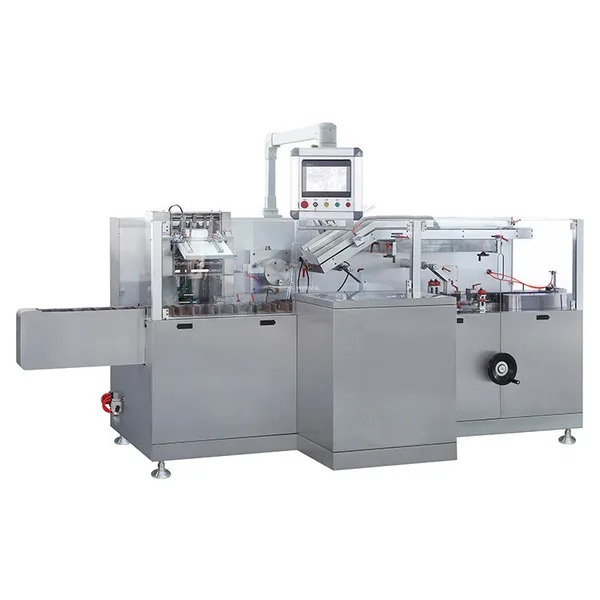
See the pharmaceutical automatic continuous cartoning machine product page for its listed configuration. Confirm all material, format, inspection, and validation requirements with the supplier and the site quality system before making an equipment decision.
Conclusion
The most useful way to prevent material and artwork mix-ups during a cartoning changeover is to make the transition testable: clear the prior presentation, verify the next approved set, challenge the controls, and document the first acceptable condition. If the line stops or uncertainty appears, contain and investigate before restarting. Equipment can support these steps, but the manufacturer remains responsible for the approved presentation, records, and release decisions.
For a cartoning project, use the site’s Project Enquiry / Request a quote route to share the product form, carton and leaflet details, market or language variants, target output, and any existing changeover controls. That information gives SED Pharma a practical starting point for an equipment discussion.
Related Reading
Pharmaceutical packaging standards and machinery validation
How blister pack visual inspection systems improve pharmaceutical quality
Desiccant inserter machine and bottle line integration
References
1. Electronic Code of Federal Regulations. 21 CFR 211.130, Packaging and labeling operations. https://www.ecfr.gov/current/title-21/chapter-I/subchapter-C/part-211/subpart-G/section-211.130
2. Electronic Code of Federal Regulations. 21 CFR 211.188, Batch production and control records. https://www.ecfr.gov/current/title-21/chapter-I/subchapter-C/part-211/subpart-J/section-211.188
3. SED Pharma. Pharmaceutical Automatic Continuous Cartoning Machine. https://pharmaceuticalmachineryequipment.com/products/pharmaceutical-automatic-continuous-cartoning-machine