Company News
Pharmaceutical Sieving Machines Selecting Screen Size Capacity and Containment
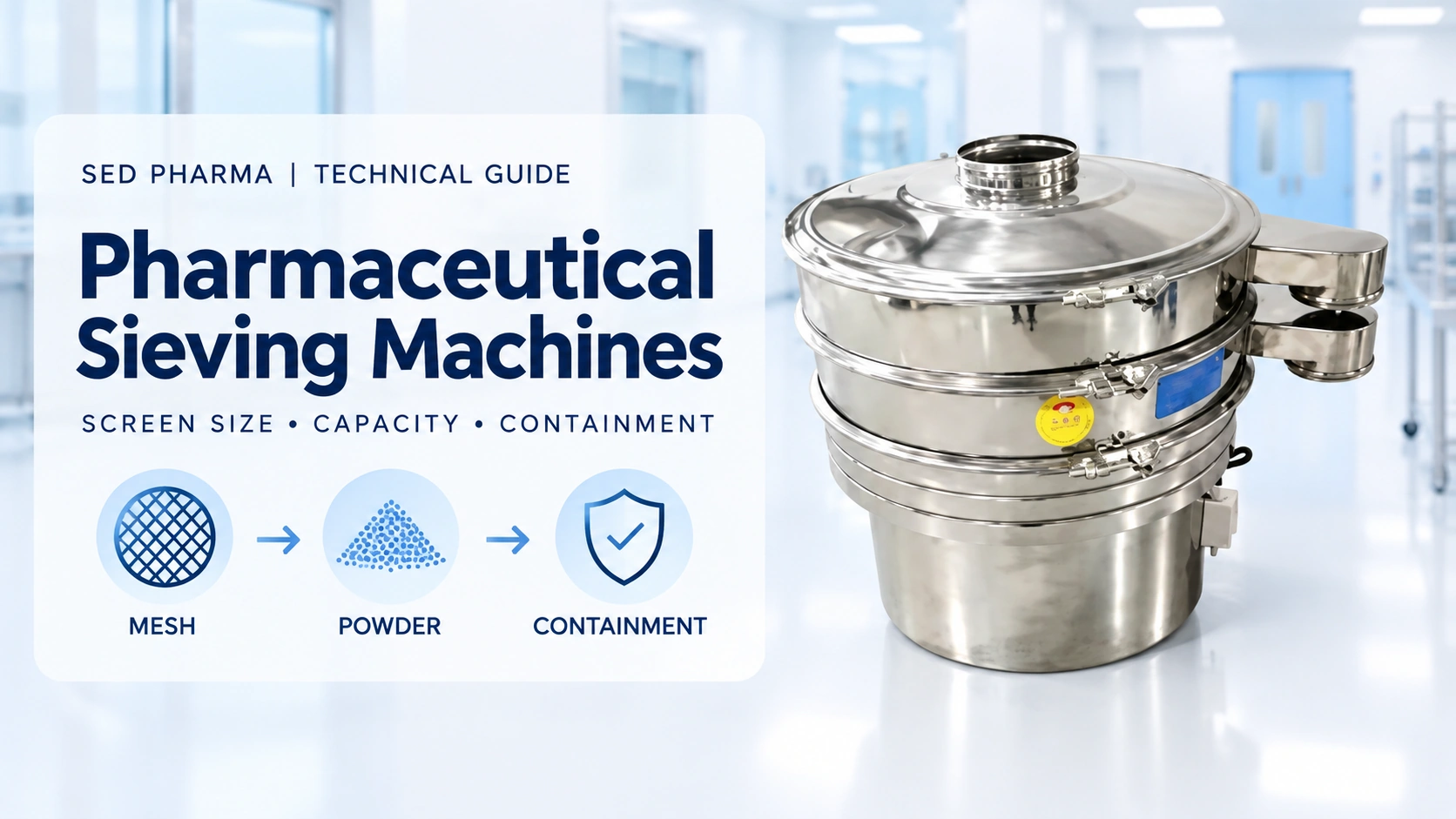
Select pharmaceutical sieving machines by proving three linked conditions: the opening produces the required separation, the installed process sustains output through a complete operating cycle, and the interfaces control powder release at the required level. The usual selection error is to choose from nominal machine diameter, mesh number, or brochure throughput alone. Instead, define the separation duty and acceptance criteria, test representative material, then evaluate feed, discharge, cleaning, and containment as one process interface. This approach helps distinguish a screen limitation from an upstream material problem or a poorly designed transfer connection.
1. Define the Screening Duty and Material
This article concerns powder and granule screening, including scalping, grading, de-lumping, and downstream protection. It does not treat a tablet deduster as interchangeable with a powder sifter. The functional requirement should identify what reports to the passing and retained fractions, whether either fraction is product or rework, and which result is critical to the receiving operation.
For process context, review the screening duty alongside upstream and downstream process equipment.
Define the Separation Requirement
A mesh designation is not a sufficient quality requirement. Specify the aperture in micrometers or millimeters, the screen material, and, where relevant, wire diameter and the applicable test convention. Mesh count can vary with wire diameter and standard convention; an aperture is the physical opening that governs the cut. Also state whether the duty is to remove oversize, retain a usable fraction, break soft agglomerates, or protect downstream equipment.
Use representative material in its expected operating condition. Moisture, hygroscopicity, electrostatic behavior, particle shape, friability, lubricant level, and the incoming particle-size distribution can change how material presents to a screen. A bench-sieve result is useful evidence, but it does not prove production performance because screen loading, motion, feed distribution, residence time, and blinding can differ. Any change that can affect product quality or validation status must proceed under the approved SOP, risk assessment, and verification process.
Check Screen Integrity Separately
A satisfactory particle-size result does not by itself demonstrate screen integrity. The selection and acceptance approach should distinguish the intended separation result from checks of the installed screen, frame, gasket, clamps, and assembly. A damaged screen or a bypass path can allow unacceptable oversize to pass even when the nominal aperture is correct. Conversely, a screen that remains intact can still fail the required cut if feed depth, residence time, or material condition changes.
For each material, decide how recovery, retained fraction, passing fraction, and residual material after discharge will be evaluated. The sample method must represent the process stream rather than a convenient scoop from one location. These checks create an evidence trail that can show whether an apparent yield issue is a true separation effect, a transfer loss, an unrepresentative sample, or an upstream material variation.
2. Determine Effective Capacity
Effective capacity is the sustained, acceptable output demonstrated under the intended material condition and a defined operating cycle. It is different from a published machine capacity and from a short trial rate. The operating-cycle calculation should account for charging, screening, discharge, sampling, cleaning, planned pauses, and the required production margin. A machine that reaches a high rate briefly but blinds, builds product at the inlet, or fails its separation criterion does not have that rate as usable capacity.
Capacity is influenced by aperture, active screen area, deck arrangement, feed distribution, bed depth, material flow, outlet geometry, and the upstream transfer method. It often falls as openings become finer or material becomes wetter, more cohesive, or richer in fines. Increasing feed rate or vibration intensity can shorten dwell time and reduce separation quality, so neither is an automatic capacity correction. Define both a target output and a minimum acceptable output, then test both against the same preapproved material and acceptance method.
When comparing alternatives, use a common calculation basis. Record the material mass charged, the time during which acceptable separation is occurring, interruptions, retained and recovered masses, and any manual interventions. Discuss the result in relation to the intended batch schedule and downstream demand. This does not require a universal rate or a copied parameter range; it requires a repeatable definition that exposes where the actual bottleneck occurs.
The capacity review should also separate a screening limitation from a line limitation. A restricted transfer hose, unstable vacuum conveying, a small receiving bin, or slow manual charging can reduce delivered output even when the screen is adequately sized. Record those constraints during the trial. That record keeps a machine-selection discussion from masking a material-transfer or operating-cycle problem that must be solved elsewhere in the line.
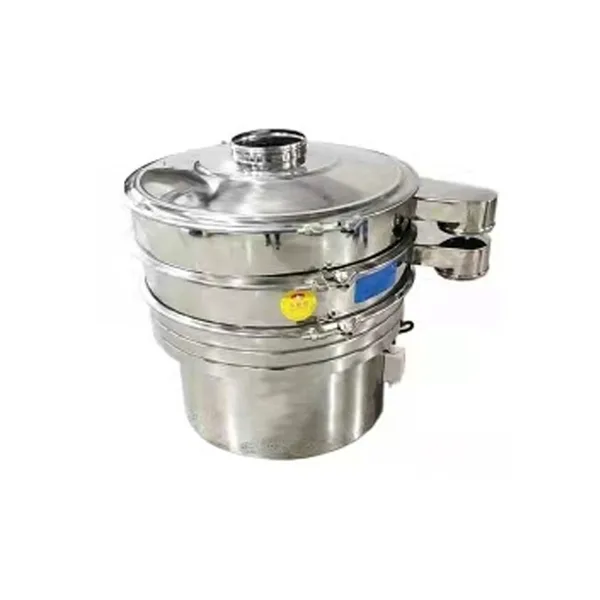
For an equipment example, review a vibrating screen with a comparable process interface. Its published construction and deck information are a starting point for discussion, not proof that one configuration will meet every material duty.
If Trial Results Miss the Target
Treat a screening symptom as a lead, not a diagnosis. Run a controlled check with documented material condition, screen identification, feed method, settings, run duration, sample plan, and retained and passing masses. The table below separates likely mechanisms from the checks needed to confirm them.
| Observed symptom | Confirmation test | Controlled action |
|---|---|---|
| Low sustained output | Inspect both screen faces, inlet loading, retained mass, and outlet restriction after a controlled run. | Remove the verified restriction, correct feed distribution or discharge, and repeat the documented run. |
| Oversize in the passing fraction | Verify aperture and screen identity, screen integrity, gasket seal, assembly, bed depth, dwell time, and sample representativeness. | Correct the identified screen or assembly fault and confirm the result using the approved sampling method. |
| Excess acceptable material in reject | Measure the reject composition and observe feed surging, agglomerate burden, and material path at representative loading. | Review the required cut and upstream condition before changing motion or aperture under approved controls. |
| Screen blinding or unstable output | Inspect for lodged particles, moisture-related adhesion, electrostatic behavior, and changes in incoming fines. | Address the verified material or cleaning cause; then retest rather than increasing throughput by assumption. |
| Powder release at an interface | Inspect inlet and outlet connections, gasket compression, flexible-connector movement, screen-change method, and extraction response. | Repair or redesign the confirmed release path and verify the containment approach with the responsible safety and quality teams. |
| Unexpected product loss to extraction | Compare product recovery, dust-collection evidence, and separation behavior with the intended extraction arrangement. | Review the interface design and extraction strategy; do not change it without approved engineering and quality review. |
3. Design Containment and Cleanability
Containment is not established by a cover, a vacuum port, or a sealed feed inlet alone. Define the intended objective with industrial hygiene, quality, and engineering: it may concern operator exposure, cross-contamination, room protection, recovery, or nuisance dust. The required arrangement depends on the material hazard assessment, the room-pressure strategy, feed and discharge routes, screen-changing task, cleaning method, waste handling, and the evidence required to verify performance.
Review the entire material boundary: charging point, inlet geometry, flexible-connection movement during vibration, clamps and gaskets, outlet receiver, reject collection, dust-extraction interface, filter arrangement, cleaning access, and screen removal. Extraction can be necessary, but it can also entrain acceptable material or change material movement. The selection record should therefore state the intended interface condition and the method by which the responsible teams will assess it; it should not infer a containment level from a component description.
Cleanability belongs in the same review. Ask how the screen is removed, where residual material can collect, how the retained fraction is handled, and whether operators can inspect gaskets and contact surfaces without opening an uncontrolled transfer point. These details affect both changeover practicality and the quality of the evidence produced during cleaning and inspection. They should be reviewed before finalizing the layout, not after equipment arrives.
4. Plan Trials and FAT
A supplier trial or FAT should define the representative material, initial condition, target aperture, feed method, settings, run duration, acceptance criteria, sampling plan, retained and passing fractions, and observation requirements before the run. Record screen loading, material movement, product accumulation, leakage, carryover after discharge, and residues around gaskets and clamps. A short clean run is not enough when routine work includes charging, discharge, cleaning, or screen changes.
Here, FAT means factory acceptance test: a documented opportunity to confirm the agreed equipment and process evidence before shipment. It should not replace site acceptance, qualification, or routine-process verification. The protocol should make clear which observations establish equipment function, which require site integration, and which remain dependent on the approved material, room, utilities, and operating procedures.
For integrated systems, assess elevation, transfer route, utilities, controls, inspection access, cleaning access, and the space needed to change a screen safely. When results drift after granulation, examine upstream process evidence before assigning the failure to the sifter.
5. Convert Trial Evidence Into the URS
- Define the separation duty, product and reject paths, and acceptance criterion.
- Characterize representative material and state the aperture requirement in physical units.
- Calculate the required effective output from the operating cycle, not a brochure rate.
- Run a controlled trial that measures separation, recovery, loading, discharge, and stability.
- Review containment, cleaning, and screen-change interfaces as part of the process boundary.
- Convert demonstrated conditions into the URS, FAT protocol, installation review, and approved qualification plan.
Document the Requirement Without Pre-Selecting the Answer
A concise URS should cover the material and duty, required cut, target and minimum effective output, feed and discharge interfaces, operating mode, product-contact construction, inspection and cleaning access, containment objective, utilities, controls, records, and acceptance tests. State the screen configuration, but leave final motion, settings, and dimensions to representative-trial evidence and line-layout review. This makes the requirement testable without assuming that a nominal diameter or a model label solves the process duty.
Conclusion
The right pharmaceutical sieving machines are selected by demonstrating, not assuming, that the aperture achieves the intended cut, the complete operating cycle supports the required effective capacity, and every transfer and access point supports the containment objective. Screen mesh, nameplate capacity, and a closed lid are starting data. The selection becomes defensible only when representative-material evidence, process interfaces, and approved quality and safety controls agree. This sequence also makes later troubleshooting faster, because the original duty and trial evidence remain clear.
Discuss Your Screening Requirement
Send SED Pharma your material description, target aperture or particle-size limit, target and minimum output, process flow, current screen details, representative material condition, blockage or defect photos, planned connections, cleaning method, and containment objective for an initial technical review. You can also browse the wider equipment range when you need broader process context.