Company News
Cartoner Leaflet Feeding Problems: Separation, Static and Timing
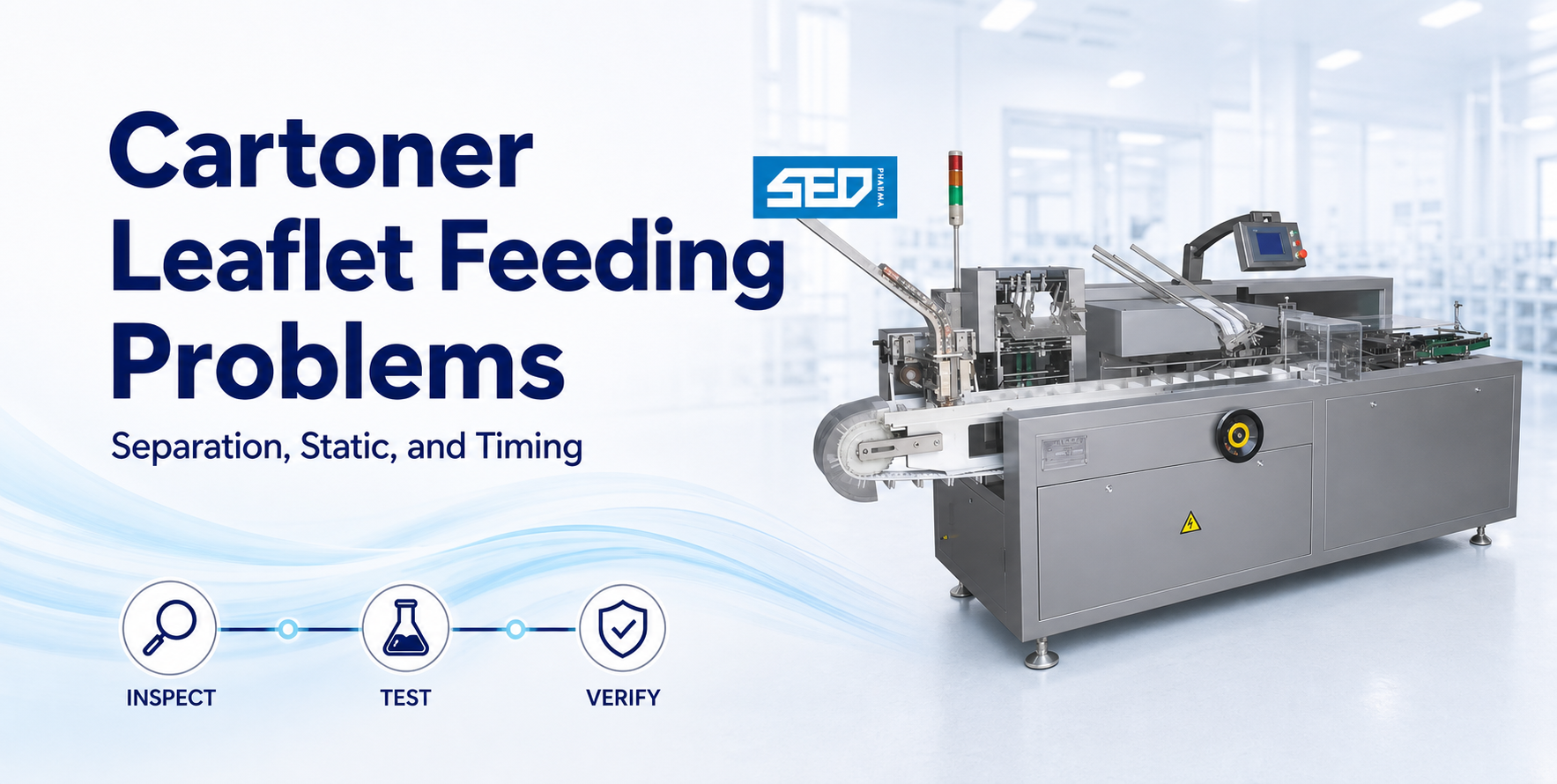
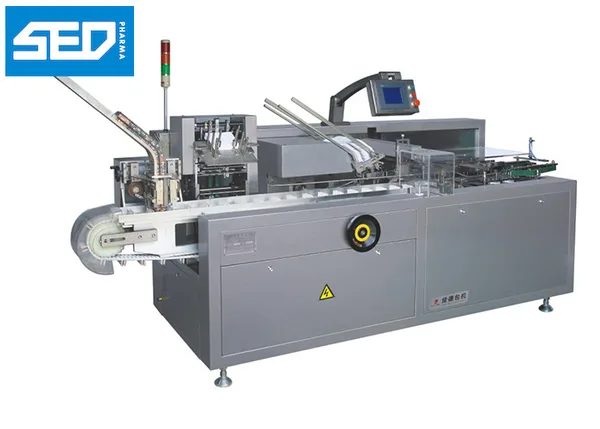
Figure 1. SED automatic horizontal cartoning machine used for leaflet folding and feeding.
Why Cartoner Leaflet Feeding Problems Occur
Cartoner leaflet feeding problems usually come from one of four stages: the stack does not release one sheet, the pickup system does not hold it, the detector does not confirm it, or the leaflet reaches the insertion point outside the machine window. Begin with leaflet dimensions, paper weight, curl, fold memory and stack condition. Then observe vacuum pickup and separation at low speed, control static and dust, and finally verify sensor position and timing against the product, carton and pusher cycle. Do not change several timing values at once; first determine where the leaflet stops following the intended path.
Fast diagnostic rule: A double feed often originates during separation, but the second sheet may also be entrained later at the first roller nip. A dropped leaflet often points to pickup or transfer; a false missing-leaflet alarm points to detection; and a crushed or late leaflet points to synchronization. These are diagnostic starting points, not conclusions. The same alarm can be triggered by different physical faults, so use single-cycle observation before editing the recipe.
Classify the Symptom Before Adjusting the Feeder
Record the failure at the earliest point where it becomes visible. A leaflet absent from the finished carton does not prove that the magazine failed to feed: it may have been picked, lost during folding, rejected after an optional code check or delivered too late for insertion. Use safe jog or single-cycle mode according to the machine manual and site SOP. Observe the stack face, installed vacuum pickup device, separator, first roller nip, folding pockets, discharge belts, presence sensor and insertion station in sequence.
- Missing leaflet: identify whether no sheet was picked, the sheet was dropped, the fold jammed, the sensor did not switch or the interlock/reject logic acted correctly.
- Double feed: look for two sheets leaving the stack together, inadequate separation force, static cling or polished rollers. If a double-sheet detector is installed, also confirm that its reference is taught for the current stock.
- Fold failure: inspect squareness at entry, paper curl, fold-plate gaps, roller cleanliness, compressed-air assists and whether the sheet reaches the folding rollers consistently.
- Late or crushed insertion: compare leaflet discharge to carton pocket and product-pusher position; check transfer belts, slip and stored format timing before moving sensors.
Cause-Test-Action Diagnostic Table
| Possible cause | Confirmation test | Corrective action |
|---|---|---|
| Leaflet size, paper weight or stiffness outside the approved format | Compare dimensions, grain direction, caliper and basis weight with the approved component specification | Quarantine mixed or nonconforming stock; load the correct format and reverify setup |
| Curl, fold memory or uneven stack pressure | Inspect a small sample on a flat surface and compare top, middle and bottom of the bundle | Condition and store leaflets per supplier/site controls; square the stack and adjust guides without pinching |
| Static charge makes sheets cling | Observe whether sheets lift together or attract after handling; compare conditions and approved antistatic function | Restore environmental/material controls; clean and verify approved ionization or antistatic devices |
| Separator or retaining fingers mis-set or worn | Jog pickup and watch whether the second sheet is restrained without damaging the first | Set to the machine format reference; replace worn parts and document the change |
| Vacuum low, late or unstable | Check vacuum indication, filters, valves and the on/off event. For cups, inspect hose leakage and contact; for a suction roller, inspect its ports, surface and release point. | Clean or replace defective pneumatic parts; restore the approved vacuum and timing range |
| Vacuum pickup device does not suit the sheet condition | For cups, inspect wear, contamination and contact; for a suction roller, inspect blocked ports, surface condition and sheet release. | Service the installed pickup device with approved parts; correct stack presentation rather than adding excessive vacuum. |
| Roller or belt slip during transfer/folding | Mark a controlled test sheet and observe speed consistency, skew, belt tension and roller contamination | Clean and set transport components; replace worn belts/rollers and reconfirm registration |
| Leaflet-presence sensor, or optional double-sheet detector, misaligned or incorrectly taught | Pass approved single and missing-leaflet samples; add a double-sheet challenge only when that detector is installed. | Clean, align and teach the sensor under change control; verify alarm and reject response |
| Leaflet timing is early or late relative to carton/product | Use single-cycle observation or approved position diagnostics to compare arrival events | Correct the authorized mechanical phase; if timing is stored electronically, change one event at a time and requalify the format. |
Troubleshooting Sequence: Separate, Pick, Detect, Synchronize
- Contain and preserve evidence. Separate affected cartons and loose leaflets. Save the leaflet lot, dimensions, paper specification, fold pattern, machine recipe, running speed, alarms and defect photos under the site's deviation procedure.
- Confirm the machine's response. Challenge the approved missing-leaflet function and, if a double-sheet detector is installed, its double-feed function according to the validated procedure. Verify whether the machine stops, inhibits carton feed or rejects the affected carton as designed.
- Inspect the leaflet stack. Check orientation, squareness, guide clearance, pile pressure, curl, blocking, edge damage and fold memory. Compare several bundles and positions in the bundle instead of judging one sheet.
- Observe separation at low speed. In safe jog or single-cycle mode, watch one pickup event. If two sheets move together, focus on static, stack conditioning and separator geometry; where a double-sheet detector is installed, verify its response before changing vacuum timing.
- Verify vacuum pickup and release. Inspect the installed pickup device, hoses, filters, valves and vacuum indication. For suction cups, check wear, contact and hose leakage; for a suction roller, check its vacuum ports, surface and release point. Confirm that the sheet remains controlled through transfer and releases only after the next transport element takes over.
- Trace the fold and transfer path. Look for skew at the first nip, roller contamination, belt slip, incorrect folding-pocket setting, excessive fold resistance and an unstable discharge. A good pickup can still become a missing leaflet downstream.
- Challenge the sensors. First clean and align the standard leaflet-presence sensor and test approved single and missing-leaflet samples. If a code reader or double-sheet detector is installed, clean and align it, then add the approved incorrect-code or double-sheet challenge. Confirm both the signal and the programmed stop, inhibit or reject outcome.
- Verify timing last. Compare leaflet arrival with carton pocket, product presence and pusher position. If timing is mechanically phased, adjust only the authorized reference; if the installed control system stores format-specific events, change only the approved event. Then repeat at startup, nominal speed and the validated speed range. SED Pharma can review cycle videos and settings when feeder integration is part of the investigation.
Separation and Paper Condition
Single-sheet feeding begins at the interface between the bottom or top leaflet and the stack. Paper weight alone does not predict behavior: caliper, stiffness, coating, grain direction, cut quality, ink coverage, moisture history, curl and fold memory all affect friction and air entry between sheets. A guide set too tightly can bow the stack; too little support can let it fan or skew. Follow the leaflet and feeder specifications rather than transferring settings from a visually similar insert.
For double feeds, observe whether the second sheet is pulled at the initial lift or joins later at the roller nip. The first pattern points toward sheet blocking, static or separator setup. The second suggests transport friction, roller gap or detection. Do not compensate for a worn separator by increasing vacuum without confirming that the approved single sheet remains flat and undamaged.
Use a controlled leaflet sample to separate material variation from machine variation. Record unfolded length and width, folded thickness or caliper, basis weight, grain direction if specified, and visible curl after the bundle has equilibrated in the packaging room. Compare sheets from the top, middle and bottom of the bundle. If only one bundle or one location in a bundle produces doubles, hold the feeder settings and investigate component storage, cutting, ink coverage or compression. If multiple approved bundles fail at the same pickup position, the evidence shifts toward guides, retaining fingers, suction geometry or transport wear.
Static, Vacuum and the Pickup Window
Low relative humidity, dry paper and repeated sliding contact can increase electrostatic attraction. The practical evidence is not merely a static reading: sheets cling, rise together, repel against guides or fail to settle consistently. Confirm environmental conditions and the performance of any approved ionizing or antistatic device. Avoid unapproved sprays or improvised grounding that could contaminate printed components or alter a qualified process.
The installed vacuum pickup device must hold the leaflet through acceleration and release it into a controlled nip or belt. With suction cups, low vacuum can result from supply loss, restricted filters, cracked hoses, worn cups or incorrect valve timing. With a suction roller, inspect vacuum ports, roller-surface condition and the release sector. Excessive or early vacuum can deform thin stock or help lift a second sheet. Because required vacuum and event positions depend on feeder design, leaflet area, stock and speed, use the equipment documentation and validated setup window rather than a universal value.
To test the pickup window, run the authorized single-cycle or diagnostic mode and observe three events. First, the installed pickup device should acquire one sheet without bowing the stack or dragging a second leaflet. Second, the vacuum indication should remain stable through transfer. Third, vacuum should release only after the receiving roller or belt has positive control. With suction cups, a drop during acceleration points toward leakage, cup wear or insufficient holding margin; with a suction roller, inspect blocked ports, surface condition and the release sector. Record the event position or time using the machine's approved diagnostic reference rather than estimating by eye at full speed.
Sensors and Timing: Confirm the Event, Not Just the Signal
A presence sensor proves that material crossed its field; it does not prove that the correct leaflet reached the carton. Inspect its lens, bracket, background contrast, cable condition and signal stability, then challenge it with approved single and missing-leaflet samples. If a double-sheet detector is installed, teach a reference appropriate to leaflet thickness and fold and challenge it with the approved double standard. If code verification is installed, test approved correct and incorrect patterns and confirm the defined reject logic.
Timing should be adjusted only after the sheet path is mechanically repeatable. A late leaflet can be caused by belt slip or a hesitant fold, not an incorrect control offset. Compare the physical leaflet edge with a reliable machine reference across repeated cycles. If timing is mechanically phased, inspect the approved reference marks and transmission components. If the installed control system stores format-specific servo positions or timing events, verify the active recipe and matching change parts. Any change affecting leaflet presence assurance should follow SOP, risk assessment, validation and change control.
Build the sensor challenge around the functions actually installed. Always include one approved leaflet and one missing-leaflet sample. Add an approved double-sheet standard only when double-sheet detection is installed, and add an incorrect-code sample only when code verification is installed. For each applicable challenge, record the sensor state, HMI message, carton-feed inhibit or stop response, reject command and physical disposition of the affected pack. A correct signal with the wrong machine response indicates a logic, recipe or output-path problem; an unstable signal points toward alignment, contamination, contrast or teach settings. Do not disable an installed verification function merely to keep the cartoner running unless an approved deviation authorizes the condition.
Supporting source: SED-100WZH Automatic Horizontal Cartoning Machine, Feature of Auto Cartoner Machine - View source
How to Confirm the Correction
After correcting the suspected cause, run a defined challenge that covers normal production and the conditions most likely to expose the fault. Use the site's approved sample plan and reconciliation requirements. Inspect finished cartons for leaflet presence, acceptable fold, damage and interference with product insertion or flap closure; where code verification is installed, also confirm the correct code.
Define acceptance before the run. At minimum, specify the sample locations, operating speeds, number of magazine replenishments, alarm challenges, restart conditions and the method used to confirm leaflet presence. Where the process is validated, use the approved quantities and limits rather than creating new acceptance criteria for the investigation. Retain the before-and-after evidence with the deviation or maintenance record so that a repeat failure can be compared against the same component lot, setup and machine response.
- Repeat with representative leaflet bundles or lots and after replenishing the magazine.
- Challenge the missing-leaflet condition; where the corresponding functions are installed, also challenge double-sheet and incorrect-code conditions and verify the programmed response.
- Confirm at startup, nominal production speed and permitted speed transitions; include restart after a controlled stop where required.
- Reconcile rejected cartons and leaflets, document settings, and update approved setup instructions only after quality review.
Conclusion
Reliable control of cartoner leaflet feeding problems comes from identifying the failed event. First prove that one sheet separates from a properly conditioned stack. Then confirm vacuum pickup, folding and transfer, followed by sensor challenge and only then timing against the carton and product cycle. This order prevents an electronic offset from masking static, paper, wear or vacuum faults and supports a repeatable leaflet-presence control strategy.