Company News
Automatic Vial Inspection Machine Selection for Line Fit and FAT
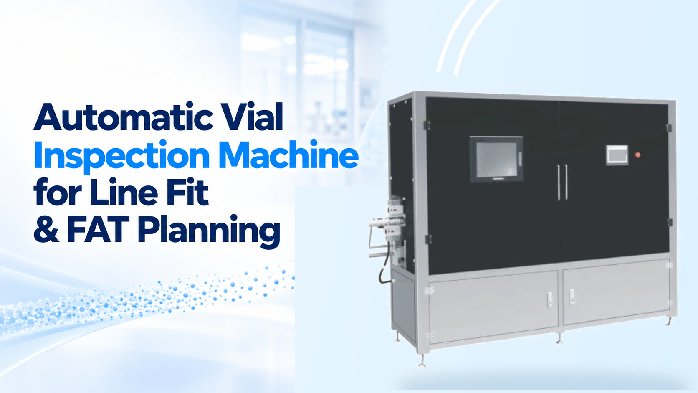
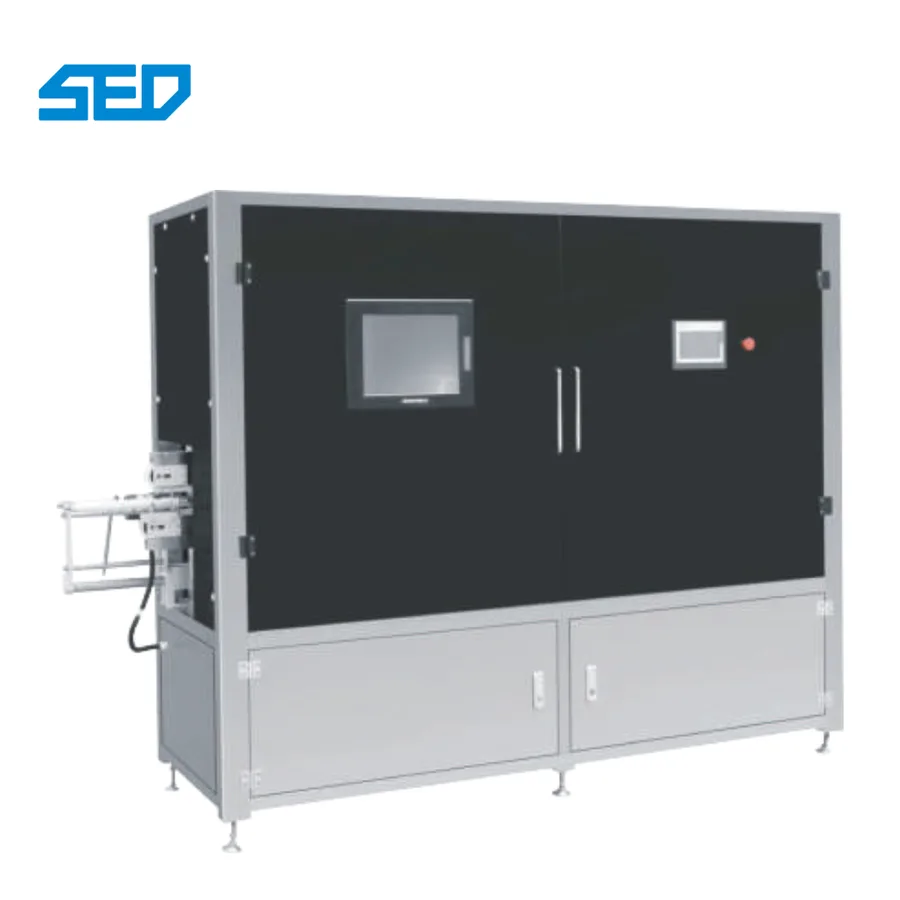
An automatic vial inspection machine fits when the line needs every vial to pass through a repeatable presentation, inspection, rejection, and batch-record workflow at a sustained rate. The purchase decision should start with the vial and product condition, defect decision, line interface, and evidence needed for release or investigation. Camera count and nominal speed come later. A system that recognizes a defect in a supplier demonstration but cannot handle the actual vial, product appearance, or reject reconciliation is not yet a usable inspection process.

This article addresses automated visual inspection of vials and similar small containers. It does not replace approved acceptance criteria, container-closure integrity testing, subvisible-particle testing, fill-volume verification, or the site quality system. Any change that could affect product quality or validation status must be managed through the approved risk assessment and change-control process.
Define the Inspection Decision Before Selecting Equipment
Start by stating what each inspection station must decide. Typical visible observations include mobile visible particles, glass damage, cosmetic marks, closure defects, fill-level appearance, label presence, and container contamination. A visual result is not automatically proof of root cause or of another quality attribute. For example, a camera can flag an apparent low fill or cap anomaly, while the approved process may require a separate method to confirm volume or closure performance.
Separate the task into defect families and specify the disposition for each: accepted, rejected, or sent for controlled secondary review. This prevents a broad phrase such as “inspect vial quality” from being treated as a detection claim that no test set has demonstrated. FDA notes that visible-particle control should use a risk-based approach spanning product development, manufacturing controls, inspection, investigation, and corrective action; the article reference should be applied through the site procedure, not copied as a generic compliance promise.
Confirm That the Inspection Station Fits the Line
An automatic station must be evaluated as part of the line rather than as an isolated rated-speed number. Map the incoming container spacing, upstream accumulation, transfer method, inspection presentation, reject route, downstream handoff, and recovery procedure after a stop. Include planned format changes and the slowest qualified operating condition, not only the best-case production run.
Use a representative line trial to measure actual station capacity. Record the sustained accepted flow, rejected and secondary-review flow, short stops, restart recovery, and the time required to replenish or clear a buffer. The relevant question is whether the proven station output and recovery behavior support the batch plan; a brochure speed alone does not establish line fit.
| Line question | What to observe during the trial | Specification consequence |
|---|---|---|
| Can the vial be presented consistently? | Observe spacing, orientation, rotation, vibration, reflections, and the view of shoulder, heel, closure, and liquid zone. | Define transport, guides, rotation, imaging positions, and allowed vial-format range. |
| Can the station absorb normal variation? | Run representative starts, stops, short gaps, and upstream accumulation conditions. | Define buffer capacity, stop logic, restart sequence, and reconciliation after interruption. |
| Can the reject route remain controlled? | Trace accepted, rejected, and secondary-review vials from inspection through collection and count reconciliation. | Define physical segregation, reject verification, container identification, and exception handling. |
| Can future formats be supported? | Review new vial diameter, height, glass color, fill height, cap, label, and product appearance against the demonstrated setup. | List change parts, recipes, setup checks, and the change-control evidence required. |
Choose the Automation Level From the Operating Model
| Operating condition | Automation fit | Pre-selection verification |
|---|---|---|
| Continuous high-speed line | Automatic inspection is usually the primary fit when presentation, reject routing, and electronic evidence must stay synchronized at sustained output. | Run the line interface, buffer, restart, reject reconciliation, and record workflow at representative operating conditions. |
| Intermittent batch line | Automatic inspection may fit when batch traceability and repeatable presentation matter more than instantaneous speed. A semi-automatic station can remain suitable if the measured batch cycle is controlled. | Compare effective batch completion time, staffing, buffer use, and recovery after interruption. |
| Frequent changeovers | Select the level of automation only after checking format tools, recipes, lighting setup, and evidence required for each change. | Demonstrate the slowest planned format and the first acceptable run after changeover. |
| Complex product or container conditions | Automation is not a substitute for an inspection method. Difficult product appearance or container geometry may require a limited scope, added views, or a supplemental strategy. | Use representative samples to confirm views, limitations, outcomes, and the need for a separate method. |
Build the Test Set Around the Actual Product and Container
A useful factory acceptance test begins with a controlled sample plan, not a generic camera demonstration. Define the product state at inspection, vial geometry, glass color, fill condition, closure components, labels, and the defect or attribute that each sample represents. A clear empty vial does not establish performance on a filled amber vial, a foaming product, a suspension, or a vial with a reflective cap. Any proposed automatic vial inspection system should therefore be evaluated with representative product and container conditions.
For each defect family, agree how samples are created, identified, protected, and retired. Distinguish confirmed defect samples from visual challenges that are only illustrative. The test plan should also state whether a result is measured as a detection, a rejection, a secondary-review trigger, or a known limitation. Do not infer a minimum detectable defect from camera resolution, product photographs, or a single successful pass.
Where the site uses trained human review as part of the process, the test plan must show how machine decisions, reviewer decisions, and physical vial disposition remain connected. The operating procedure should define how uncertain units are removed from normal flow and how a reviewer returns a final disposition without losing batch traceability.
Specify Optics and Handling as One Inspection Method
Lighting, background, motion, vial orientation, and product appearance form one inspection method. A camera configuration that gives clear contrast for particles may not be the configuration that exposes a crack, a stopper defect, or a label issue. Ask the supplier to demonstrate the agreed inspection views under the actual lighting arrangement and with representative vials, rather than describing capability from a component list.
The requirement should identify which views are required and which areas remain limited. Include vial base and shoulder geometry, liquid interface, cap or stopper, label coverage, and any region masked by guides or reflections. If the product or package creates a difficult-to-inspect condition, document the limitation and define whether a separate inspection strategy or supplemental test is required.
Turn Data Requirements Into Testable Requirements
Electronic records are useful only when they can reconstruct the batch event. Define the information needed for the intended task: batch and product identification, format or recipe, equipment configuration, inspected quantity, rejected quantity, secondary-review quantity, defect category, image retention, operator actions, and exception recovery. The required record set depends on the approved process and should be reviewed by the site quality and IT functions before final configuration.
During FAT, ask to see the complete record workflow. Confirm who can create or change a recipe, how a change is identified, how an image is associated with a vial or event, how an interrupted batch is resumed, and how the reject count is reconciled. A screen that displays an image is not by itself evidence that the record supports batch review or investigation.
Use FAT to Prove the Agreed Workflow
FAT should demonstrate the delivered configuration against the written requirement using representative product and container conditions where available. Before the test, agree the sample inventory, defect labels, line or simulation sequence, expected outcomes, evidence to retain, deviations, and limits of the demonstration. Record the configuration, lighting condition, operating state, and any conditions that were not represented.
| FAT element | Question to resolve | Evidence to retain |
|---|---|---|
| Presentation and imaging | Does the system present each agreed vial condition to the required inspection views? | Configuration record, representative images, trial sequence, and noted limitations. |
| Detection and disposition | Does each defined sample produce the agreed reject, acceptance, secondary-review, or unresolved outcome? | Sample-level detection, false reject, review, unresolved, and physical-reconciliation results. |
| Line recovery | Can the station stop, restart, and recover without unaccounted units or unclear status? | Restart sequence, counts before and after recovery, and operator actions. |
| Data and review | Can the proposed record support batch review and investigation under the site process? | Sample report, images where required, user-action demonstration, operating state, sample limitations, and reviewer comments. |
A passed FAT does not replace site qualification. It establishes that the delivered configuration can execute the agreed test under the demonstrated conditions. Site acceptance, qualification, and routine monitoring should follow the approved validation and quality procedures.
Define Defect Risk Before Defining a Pass Result
Do not use one pass result for every observable condition. Before FAT or SAT, the site should classify each defect or attribute by its documented risk rationale, such as critical, major, or minor. The labels and their use must come from the product risk assessment and approved quality process. A critical visible-particle or container-related concern may require a different challenge design, review rule, escalation path, and evidence package from a minor cosmetic observation.
| Risk tier | Challenge-sample approach | Decision and review rule |
|---|---|---|
| Critical | Use controlled, uniquely identified samples that represent the defined high-risk condition. Record all applicable inspection conditions and known limits. | Predefine reject/hold handling, independent review where required, investigation triggers, and the basis for acceptance. |
| Major | Use representative samples that exercise the intended view, handling, and decision rule across relevant formats or product states. | Predefine reject or secondary-review logic and capture outcome consistency. |
| Minor | Use samples suited to the documented cosmetic or presentation objective; do not let them stand in for higher-risk conditions. | Define the intended classification, tolerance, and review pathway without applying a critical-defect standard by default. |
Use a Performance Dataset Rather Than a Demonstration Summary
For every FAT or SAT sample result, capture enough context to compare performance later. The minimum dataset should include the sample identifier, defect category and risk tier, product, vial format, fill condition, lighting or recipe, operating state, expected result, actual result, reviewer result, and sample-validity status. Outcome fields should distinguish detection, false reject, missed defect, secondary review, unresolved sample, and invalid or retired sample. The site should define how those fields are summarized and approved; this article does not prescribe a fixed detection rate or sample size.
| Performance field | Why it matters |
|---|---|
| Expected and actual result | Makes the decision rule testable instead of relying on a general statement that the system worked. |
| Detection, missed defect, and false reject | Separates sensitivity-related evidence from unnecessary rejection burden. |
| Review and unresolved result | Shows where the approved workflow needs human disposition or investigation. |
| Sample and operating condition | Links performance to the actual product, vial, fill, recipe, lighting, and equipment state. |
| Sample-validity status and limitation | Prevents an expired, damaged, or nonrepresentative sample from being treated as comparable evidence. |
Govern the Defect Sample Lifecycle
A defect sample set is a controlled project asset, not a one-time demonstration prop. Assign each sample a unique identifier, defect category, risk tier, origin or preparation method, product/container state, storage condition, owner, approval status, and intended use. Quality should approve the sample plan and decide when samples are suitable for FAT, requalification, change evaluation, or training. Keep sample inventory and result history linked so that later studies can identify the exact unit used.
Review samples at a defined interval and after any event that may change their representativeness. Particles can settle or change appearance; glass damage can worsen; labels, closures, and product states can change. Define retirement criteria, replacement-sample preparation, comparison with the retired sample where practical, and the approval required before a replacement enters the controlled set. If a sample is invalid, retain that status in the record rather than silently removing it from a comparison.
Validate Data Integrity and Controlled Changes
Electronic records must be verified as a system, not only listed in a specification. Trace the user requirement through configuration, FAT evidence, SAT evidence, and approved operation. Test user roles, permissions, audit trail review, recipe creation and revision, timestamp behavior and time synchronization, backup and restore, image retention, interface failure, exception handling, and recovery after interruption. The required depth depends on the site system and intended use, but a record should remain attributable, complete, consistent, and available through its lifecycle.
A change to a light threshold, inspection rule, recipe, camera setting, or visual-model version should not be treated as an informal optimization. The change assessment should distinguish an operating recipe adjustment from a controlled software, rule, or model change. For either case, document the impact on defect decisions, sample coverage, data records, and validated state. Re-run relevant challenge samples and obtain the required approvals when the change can affect the approved inspection method or evidence used to support it.
Use the FAT Record Template as a Project Control
The companion FAT record template provides a reusable structure for sample identification, risk tier, conditions, expected and actual outcome, review, deviation, and approval. Copy it into the site document-control workflow and add the approved acceptance logic before use. It is an engineering aid, not a substitute for the site validation protocol or quality approval process.
Know When Automatic Inspection Is the Better Fit
Automatic inspection is usually the better fit when a continuous line requires sustained, repeatable vial presentation; when manual handling would constrain output or traceability; or when the project requires controlled reject routing and electronic evidence at scale. It is not automatically the correct answer for every vial. Small development batches, frequent major format changes, or an undefined defect strategy may need a more limited process first.
The decision to move from a semi-automatic or manual method should be supported by observed throughput constraints, changeover burden, defect-review requirements, handling risk, and the evidence needed by the quality system. Do not select automation only to obtain a higher nominal speed. Select it when the full inspection and disposition workflow can be demonstrated for the actual process.
Questions Before Requesting a Proposal
- Which vial formats, product states, closure variants, and label conditions are in scope at launch and after planned changeovers?
- Which visible defect families or attributes must produce rejection, secondary review, or a separate confirmation method?
- What sustained line condition, stop recovery, buffer capacity, and reject reconciliation must the station demonstrate?
- Which controlled samples are available for FAT, and which limitations must be documented before the test?
- Which records, images, permissions, and review steps are required by the site quality process?
Frequently Asked Questions
Can an automatic vial inspection machine replace all vial quality tests
No. It can perform the defined visual inspection task and associated disposition workflow. The approved process may require separate methods for attributes such as container-closure integrity, subvisible particles, or fill-volume confirmation.
What should a supplier demonstrate during FAT
The demonstrated workflow should use agreed representative vials and sample conditions, cover inspection views and dispositions, show reject reconciliation and recovery after interruption, and produce the records the site needs to review the event.
When should a line move from a semi-automatic station to automation
Consider automation when the demonstrated manual or semi-automatic workflow cannot sustain the required line rate, controlled presentation, reject segregation, changeover discipline, or evidence needed for batch review.
Conclusion
An automatic vial inspection machine should be selected as a validated process component, not as a camera specification. Begin with the vial, product state, visible decision, and line behavior. Then define the sample set, presentation method, record workflow, and FAT evidence that demonstrate the equipment can support the intended process. This approach keeps the equipment comparison grounded in the quality decision the station must actually make.
For an initial technical review, send SED Pharma your vial drawings or samples, product state at inspection, target line condition, defect photographs or retained samples, current process flow, and required record outputs through the SED Pharma contact page.
You can also begin from the SED Pharma homepage to review the wider process-equipment range.
Related resource
- visual inspection equipment category.
- tablet and capsule inspection equipment article.
- oral liquid production line article.
- automatic capsule vision inspection guide
References
FDA. Inspection of Injectable Products for Visible Particulates. Draft guidance for industry, accessed September 2026.
USP-NF. General Chapter 1790 Visual Inspection of Injections. Accessed September 2026.